How Home Lifts Work
A home lift moves an enclosed car between floors using a cable, hydraulic, or pneumatic drive system. Each type works differently — and suits different homes and budgets.
A home lift works by moving an enclosed car — the passenger cabin — vertically between floor levels using one of three drive systems: cable traction, hydraulic piston, or pneumatic vacuum. Each system drives the car using different mechanical principles, but all residential lifts installed in Australia must comply with AS 1735.18.
Understanding how each drive system works helps you compare products intelligently when getting quotes. The right system depends on your home, the number of floors, your available space, and your budget.
This guide explains how each drive type works, what safety features AS 1735.18 requires, and what a typical installation involves. For cost guidance, see our home lift cost guide.
How the drive systems work
Cable traction
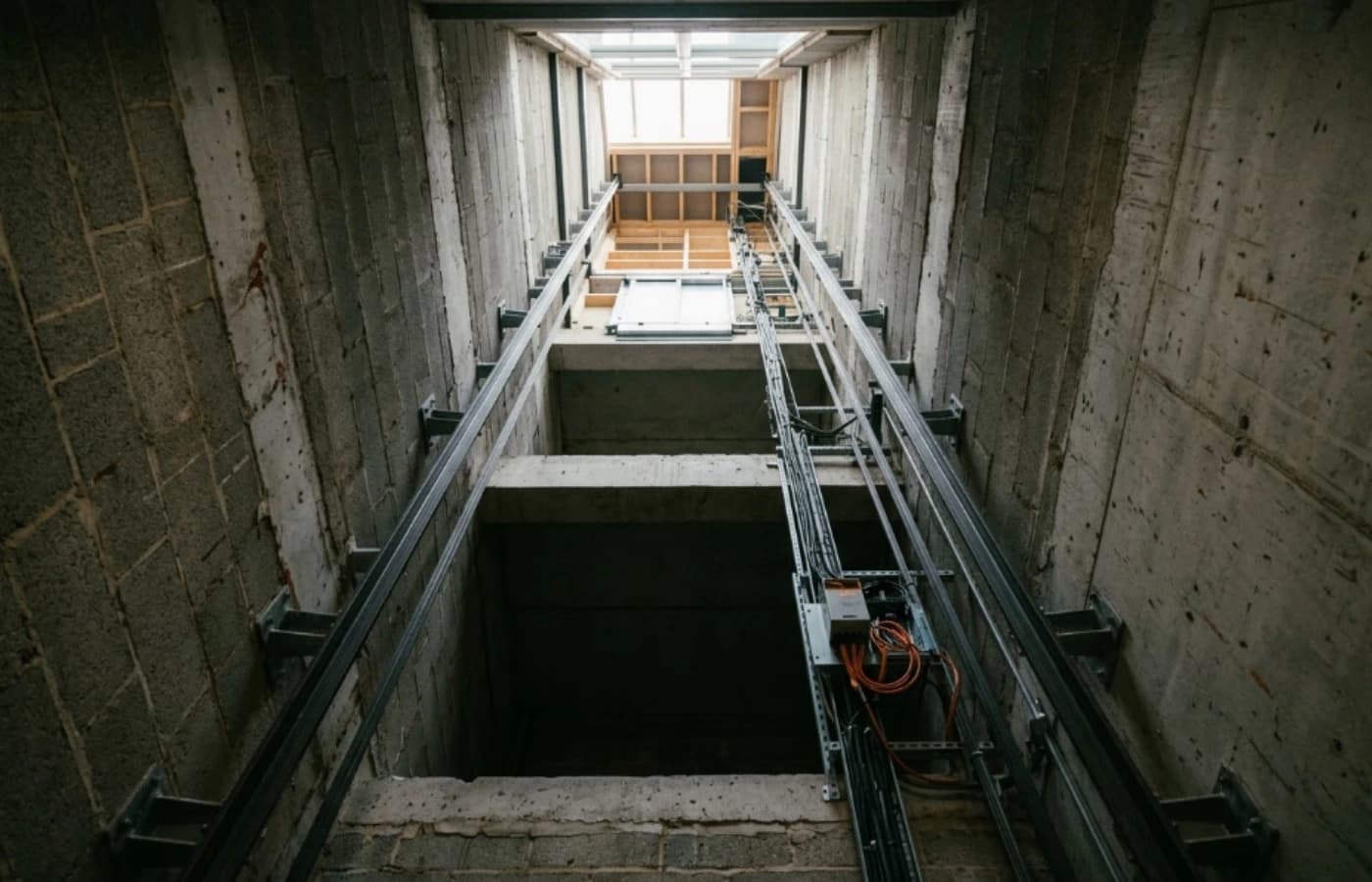
A traction home lift uses steel cables and a counterweight. An electric motor drives a sheave — a grooved wheel — which moves the cables. As the car rises, the counterweight descends, balancing the load and reducing the energy required. Traction systems reach speeds up to 0.5 m/s in residential applications and suit homes with two or more floors. They require a shaft and either an overhead machine room or a machine-room-less (MRL) arrangement inside the hoistway.
Hydraulic
A hydraulic home lift uses an oil-filled cylinder and a pump. The pump pressurises the cylinder to extend a piston, which raises the car. To descend, a valve releases the oil and the car lowers by gravity. Hydraulic systems are quiet, reliable, and common in low-rise residential installations. They require a small pump room adjacent to the shaft, typically a cupboard-sized space.
Pneumatic (vacuum)
A pneumatic lift uses air pressure differential. The car is sealed inside a transparent tube; reducing the air pressure above the car causes it to rise. The car descends by equalising the pressure. Pneumatic lifts require no shaft or machine room, which makes them well-suited to retrofitting into existing homes. The trade-off is smaller cab dimensions and a lower load capacity compared to cable or hydraulic systems.
Safety features required by Australian Standards
AS 1735.18 mandates the following safety systems in all residential lifts:
- Overload protection — the lift will not move if the load exceeds the rated capacity
- Door interlocks — the car cannot move while any door is open
- Emergency lowering — on power failure, the lift lowers to the nearest floor and opens
- Speed governor — triggers the safety gear if the car exceeds rated speed on descent
- Pit buffer — absorbs impact at the lowest landing in case of overrun
- Emergency communication — an alarm or communication device inside the car
These requirements apply regardless of drive type. Your installation must be inspected and certified by a licensed lift inspector before first use.
All residential lifts must comply with AS 1735.18 and be inspected by a licensed lift inspector before first use.
What installation involves
A standard home lift installation proceeds as follows:
- Site assessment — a supplier visits to assess structural feasibility, floor-to-floor height, headroom, and shaft or pit requirements
- Structural work — most installations require some modification: a shaft or hoistway, a floor opening, and framing around landing doors
- Electrical connection — lifts require a dedicated 240V single-phase circuit in most residential applications
- Installation — typically 3–5 working days for a pre-engineered residential lift once the structural work is complete
- Certification and registration — the completed installation must be inspected and registered with the relevant state workplace safety regulator before first use
For cost guidance across all home lift types, see our home lift cost guide. For a full overview of residential lift products available in Australia, see our home lifts overview. When you are ready to compare suppliers, get quotes through LiftQuotes.
Lift companies in Australia
Browse profiles, compare service areas, and check reviews.

Lift Shop
★ 5.0 (1551 reviews)
Australia's largest dedicated home lift specialist since 1996. 10,000+ installations. Exclusive Italian-crafted lifts with industry-leading 8-year warranty.
View profile →

Compact Home Lifts
NDIS★ 5.0 (465 reviews)
Melbourne branch of Compact Home Lifts. Compact residential lift specialist providing maintenance and repair services across Victoria.
View profile →

Next Level Elevators
★ 5.0 (454 reviews)
Award-winning provider of premium Italian-designed all-electric home elevators. Certified Eltec Partner. Showrooms in Melbourne, Sydney, and Brisbane.
View profile →

Shotton Lifts
NDIS★ 5.0 (9 reviews)
Family-owned Australian lift manufacturer since 1977. 80+ staff. Design, engineer, manufacture, install and service from Dandenong South VIC. NDIS registered.
View profile →

LiftFit Australia
NDIS★ 5.0 (8 reviews)
Victoria-based NDIS registered lift provider, est. 2011. Partners with Cibes, Savaria, and Kalea. Residential, commercial, and platform lifts.
View profile →

Easy Living Home Elevators
★ 5.0 (7 reviews)
Australia's #1 home elevator supplier since 1998. 100% Australian-owned. 11,000+ elevators in service across 6 states.
View profile →
LiftQuotes is a comparison platform. Companies shown are filtered by relevance to this page. Listing does not imply endorsement. LiftQuotes may receive a referral fee when you request quotes.
Put this into action
When you're ready to move forward, get free quotes from verified Australian lift installers.
What are you looking for today?
I need a lift installed
I have a lift that needs attention
A home lift works by moving an enclosed car — the passenger cabin — vertically between floor levels using one of three drive systems: cable traction, hydraulic piston, or pneumatic vacuum. Each system drives the car using different mechanical principles, but all residential lifts installed in Australia must comply with AS 1735.18.
Understanding how each drive system works helps you compare products intelligently when getting quotes. The right system depends on your home, the number of floors, your available space, and your budget.
This guide explains how each drive type works, what safety features AS 1735.18 requires, and what a typical installation involves. For cost guidance, see our home lift cost guide.
How the drive systems work
Cable traction
A traction home lift uses steel cables and a counterweight. An electric motor drives a sheave — a grooved wheel — which moves the cables. As the car rises, the counterweight descends, balancing the load and reducing the energy required. Traction systems reach speeds up to 0.5 m/s in residential applications and suit homes with two or more floors. They require a shaft and either an overhead machine room or a machine-room-less (MRL) arrangement inside the hoistway.
Hydraulic
A hydraulic home lift uses an oil-filled cylinder and a pump. The pump pressurises the cylinder to extend a piston, which raises the car. To descend, a valve releases the oil and the car lowers by gravity. Hydraulic systems are quiet, reliable, and common in low-rise residential installations. They require a small pump room adjacent to the shaft, typically a cupboard-sized space.
Pneumatic (vacuum)
A pneumatic lift uses air pressure differential. The car is sealed inside a transparent tube; reducing the air pressure above the car causes it to rise. The car descends by equalising the pressure. Pneumatic lifts require no shaft or machine room, which makes them well-suited to retrofitting into existing homes. The trade-off is smaller cab dimensions and a lower load capacity compared to cable or hydraulic systems.
Safety features required by Australian Standards
AS 1735.18 mandates the following safety systems in all residential lifts:
- Overload protection — the lift will not move if the load exceeds the rated capacity
- Door interlocks — the car cannot move while any door is open
- Emergency lowering — on power failure, the lift lowers to the nearest floor and opens
- Speed governor — triggers the safety gear if the car exceeds rated speed on descent
- Pit buffer — absorbs impact at the lowest landing in case of overrun
- Emergency communication — an alarm or communication device inside the car
These requirements apply regardless of drive type. Your installation must be inspected and certified by a licensed lift inspector before first use.
All residential lifts must comply with AS 1735.18 and be inspected by a licensed lift inspector before first use.
What installation involves
A standard home lift installation proceeds as follows:
- Site assessment — a supplier visits to assess structural feasibility, floor-to-floor height, headroom, and shaft or pit requirements
- Structural work — most installations require some modification: a shaft or hoistway, a floor opening, and framing around landing doors
- Electrical connection — lifts require a dedicated 240V single-phase circuit in most residential applications
- Installation — typically 3–5 working days for a pre-engineered residential lift once the structural work is complete
- Certification and registration — the completed installation must be inspected and registered with the relevant state workplace safety regulator before first use
For cost guidance across all home lift types, see our home lift cost guide. For a full overview of residential lift products available in Australia, see our home lifts overview. When you are ready to compare suppliers, get quotes through LiftQuotes.
Lift companies in Australia
Browse profiles, compare service areas, and check reviews.
Lift Shop
★ 5.0 (1551 reviews)
Australia's largest dedicated home lift specialist since 1996. 10,000+ installations. Exclusive Italian-crafted lifts with industry-leading 8-year warranty.
View profile →
Compact Home Lifts
NDIS★ 5.0 (465 reviews)
Melbourne branch of Compact Home Lifts. Compact residential lift specialist providing maintenance and repair services across Victoria.
View profile →
Next Level Elevators
★ 5.0 (454 reviews)
Award-winning provider of premium Italian-designed all-electric home elevators. Certified Eltec Partner. Showrooms in Melbourne, Sydney, and Brisbane.
View profile →
Shotton Lifts
NDIS★ 5.0 (9 reviews)
Family-owned Australian lift manufacturer since 1977. 80+ staff. Design, engineer, manufacture, install and service from Dandenong South VIC. NDIS registered.
View profile →
LiftFit Australia
NDIS★ 5.0 (8 reviews)
Victoria-based NDIS registered lift provider, est. 2011. Partners with Cibes, Savaria, and Kalea. Residential, commercial, and platform lifts.
View profile →
Easy Living Home Elevators
★ 5.0 (7 reviews)
Australia's #1 home elevator supplier since 1998. 100% Australian-owned. 11,000+ elevators in service across 6 states.
View profile →
LiftQuotes is a comparison platform. Companies shown are filtered by relevance to this page. Listing does not imply endorsement. LiftQuotes may receive a referral fee when you request quotes.
Put this into action
When you're ready to move forward, get free quotes from verified Australian lift installers.
What are you looking for today?
I need a lift installed
I have a lift that needs attention
Related guides
Location
Commercial Lifts Melbourne: Costs, Compliance & Installers
Commercial lift costs, Victorian OHS compliance and the Melbourne installer market — indicative prices, WorkSafe Victoria rules and NCC requirements for VIC projects.
Location
Commercial Lifts Sydney: Costs, Compliance & Installers
Commercial lift costs, NSW compliance and the Sydney installer market — indicative prices, SafeWork NSW rules and NCC requirements for CBD and metro projects.
Guide
What Size Lift Do I Need for a Wheelchair? (Australia)
A home lift for a wheelchair needs roughly 1,100 x 1,400 mm inside and a 900 mm clear door. See minimum sizes for a wheelchair, a carer, and turning space.
Guide
Support at Home & Lift Funding: The 2026 Guide
Can Support at Home fund a home lift or stairlift? How aged care funding works, the OT assessment, means-tested contributions, and how it differs from the NDIS.
Compare home lift suppliers
Get quotes from lift suppliers who will assess your home and recommend the right drive system. Free, no obligation.
Join 1,000+ Australians who've requested quotes through LiftQuotes
Get free quotes