Home Lifts for Elderly & Ageing in Place
A practical guide to choosing the right home lift for an older family member — covering safety features, future-proofing, costs, and funding options.
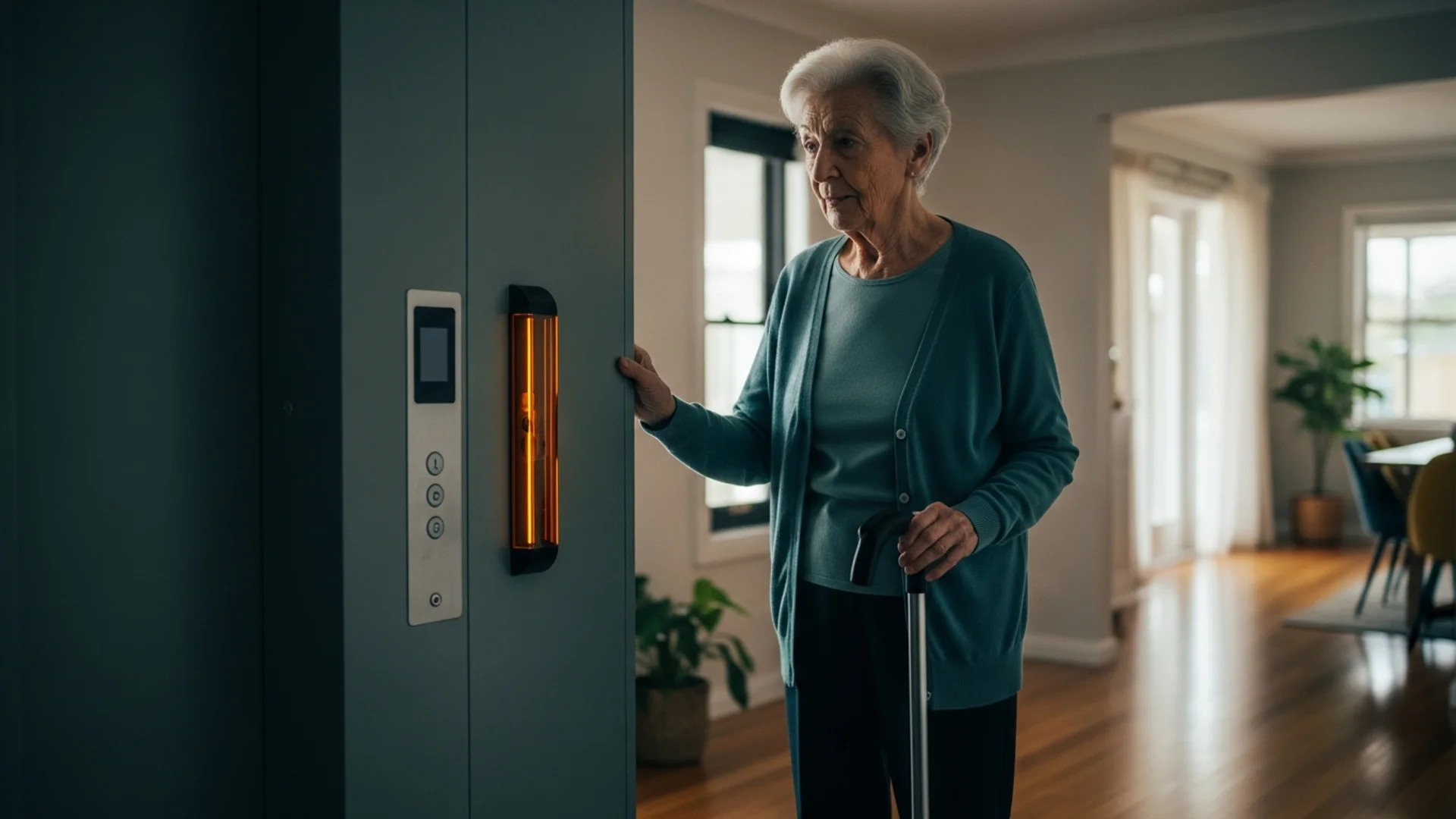
A home lift is one of the most practical modifications for an older Australian who wants to stay in a multi-storey home. It removes the daily risk of stairs and preserves independence — often for decades longer than would otherwise be possible.
If you are researching lifts for a parent or family member, this guide covers the safety features to prioritise, how to future-proof your choice, the funding pathways available, and how to decide between a home lift, stairlift, and platform lift.
Why a home lift supports ageing in place
For many older Australians, the stairs become the single biggest barrier to staying in the home they love. A fall on the stairs is one of the most common causes of serious injury for people over 65 — and the fear of falling can be just as limiting as the fall itself.
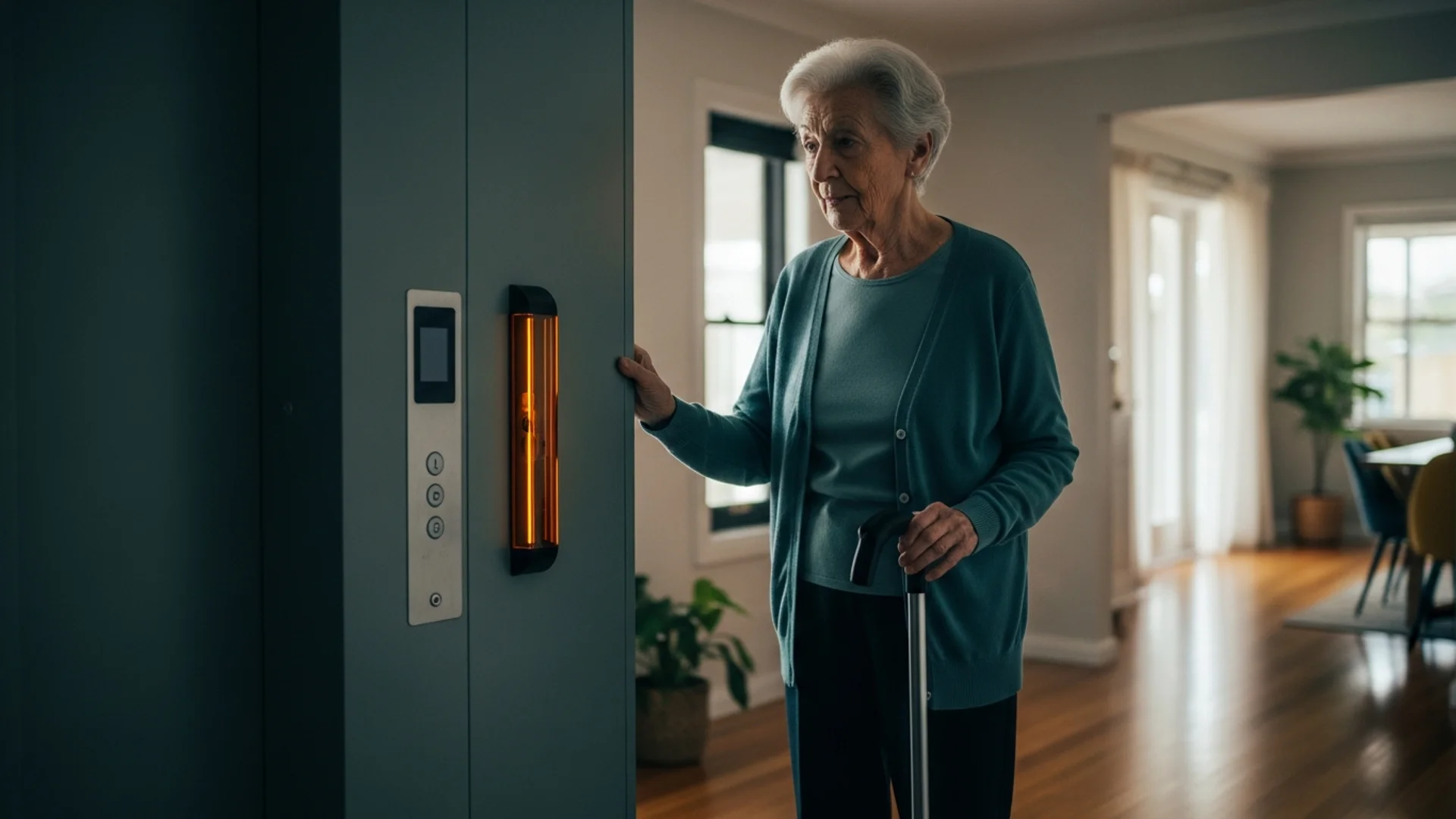
A home lift removes that barrier entirely. Rather than moving to a single-level home or into residential care, a lift lets someone continue living independently in a multi-storey house, with full access to every level.
This matters beyond convenience. Older people who remain in familiar surroundings tend to maintain stronger social connections, better mental health, and greater day-to-day autonomy. A home lift is one of the most effective home modifications for making that possible long-term.
If you are researching this for a parent or family member, the key question is not just what they need today — but what they will need in five to ten years. Choosing the right lift now avoids a costly second modification later.
Essential safety features for elderly users
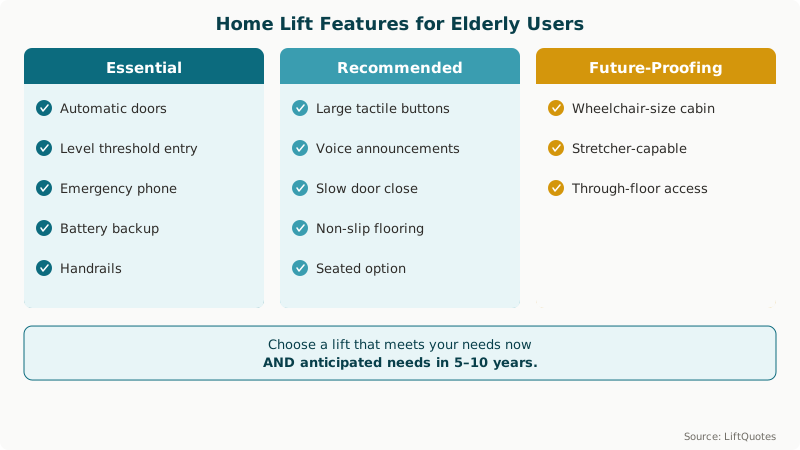
Not all lifts are equally suited to older users. When comparing options, prioritise these features:
Automatic doors open and close without the user needing to push or pull — critical for anyone with reduced grip strength or balance issues. Look for doors with slow-close settings and obstruction sensors.
Level threshold entry means no step or lip between the landing floor and the lift cabin. Even a 10mm lip can be a trip hazard. The best home lifts have a flush or near-flush transition.
Emergency phone and battery backup are required under AS/NZS 1735.18:2002 for residential lifts. The emergency phone connects to a monitoring service, and battery backup ensures the lift reaches the nearest floor during a power failure — so the user is never stranded.
Handrails on at least one wall provide support during travel and when entering or exiting. Some cabins offer fold-down seats for users who cannot stand comfortably during the ride.
Non-slip flooring and good cabin lighting reduce fall risk inside the cabin. These are simple additions but easy to overlook when specifying a lift.
For a detailed side-by-side analysis, see our home lift vs stairlift comparison.
Future-proofing: plan for the next decade
This is the most important advice for families choosing a lift for an older person: choose for the mobility level you anticipate in five to ten years, not the level today.
A person who walks independently now may use a walking frame in three years and a wheelchair in seven. If the lift cabin is too small for a wheelchair, the entire installation may need replacing — at significant cost.
Wheelchair-compatible cabin size means a minimum internal dimension of 1100mm × 1400mm, accommodating a standard manual wheelchair with an attendant. This is the size specified in AS 1735.12:2020 for accessible lifts, and it is the size most platform lifts are built to.
Through-floor access on both levels means the lift opens directly onto the living space without steps or narrow corridors. Check that both the upper and lower landings have clear, level access.
Even if a wheelchair is not needed now, choosing a cabin that can accommodate one costs very little extra at installation and avoids a far more expensive retrofit later.
Costs and funding options
As of Q2 2026, a home lift suitable for elderly users typically costs between $25,000 and $60,000 installed, depending on the lift type, number of stops, and extent of building works required. For a detailed breakdown, see our home lift cost guide.
Several funding pathways may reduce the out-of-pocket cost:
Support at Home programme — the Australian Government’s Support at Home programme (which replaced Home Care Packages and the Commonwealth Home Support Programme from July 2025) can fund home modifications including lifts, subject to an occupational therapist (OT) assessment.
NDIS — for participants with a plan that includes home modifications, a lift may be funded as assistive technology. The process involves an OT assessment, a recommendation, and NDIA approval. Our NDIS-funded lifts guide covers the full pathway.
DVA — Gold Card holders may be eligible for home modifications through the Department of Veterans’ Affairs.
Funding rarely covers the full cost, but it can reduce the gap substantially. Start with the OT assessment — it is the gateway to most funding pathways.
Choosing the right lift type
The right choice depends on current mobility, anticipated future needs, and the layout of the home.
A stairlift ($3,000–$15,000 as of Q2 2026) is the lowest-cost option and installs in a day. It suits someone who can sit, stand, and transfer independently. It does not accommodate wheelchairs and has limited weight capacity (115–160 kg). For stable, moderate mobility, it may be the practical choice — but if needs are likely to change, it may not last.
A platform lift ($22,000–$45,000) accommodates a wheelchair and requires minimal structural work. It suits single-level access where wheelchair compatibility is needed now or anticipated.
A home lift ($25,000–$60,000+) offers the most flexibility: multiple stops, higher weight capacity, and a cabin large enough for a wheelchair user and attendant. It requires a shaft and structural work but is the most future-proof option for a multi-storey home.
A site assessment from two or three lift installers — combined with an OT assessment if funding is part of the picture — is the best starting point. Get free lift quotes to compare options for your home and situation.
Lift companies in Australia
Browse profiles, compare service areas, and check reviews.

Lift Shop
★ 5.0 (1551 reviews)
Australia's largest dedicated home lift specialist since 1996. 10,000+ installations. Exclusive Italian-crafted lifts with industry-leading 8-year warranty.
View profile →

Compact Home Lifts
NDIS★ 5.0 (465 reviews)
Melbourne branch of Compact Home Lifts. Compact residential lift specialist providing maintenance and repair services across Victoria.
View profile →

Next Level Elevators
★ 5.0 (454 reviews)
Award-winning provider of premium Italian-designed all-electric home elevators. Certified Eltec Partner. Showrooms in Melbourne, Sydney, and Brisbane.
View profile →

Shotton Lifts
NDIS★ 5.0 (9 reviews)
Family-owned Australian lift manufacturer since 1977. 80+ staff. Design, engineer, manufacture, install and service from Dandenong South VIC. NDIS registered.
View profile →

LiftFit Australia
NDIS★ 5.0 (8 reviews)
Victoria-based NDIS registered lift provider, est. 2011. Partners with Cibes, Savaria, and Kalea. Residential, commercial, and platform lifts.
View profile →

Easy Living Home Elevators
★ 5.0 (7 reviews)
Australia's #1 home elevator supplier since 1998. 100% Australian-owned. 11,000+ elevators in service across 6 states.
View profile →
LiftQuotes is a comparison platform. Companies shown are filtered by relevance to this page. Listing does not imply endorsement. LiftQuotes may receive a referral fee when you request quotes.
Put this into action
When you're ready to move forward, get free quotes from verified Australian lift installers.
What are you looking for today?
I need a lift installed
I have a lift that needs attention
A home lift is one of the most practical modifications for an older Australian who wants to stay in a multi-storey home. It removes the daily risk of stairs and preserves independence — often for decades longer than would otherwise be possible.
If you are researching lifts for a parent or family member, this guide covers the safety features to prioritise, how to future-proof your choice, the funding pathways available, and how to decide between a home lift, stairlift, and platform lift.
Why a home lift supports ageing in place
For many older Australians, the stairs become the single biggest barrier to staying in the home they love. A fall on the stairs is one of the most common causes of serious injury for people over 65 — and the fear of falling can be just as limiting as the fall itself.
A home lift removes that barrier entirely. Rather than moving to a single-level home or into residential care, a lift lets someone continue living independently in a multi-storey house, with full access to every level.
This matters beyond convenience. Older people who remain in familiar surroundings tend to maintain stronger social connections, better mental health, and greater day-to-day autonomy. A home lift is one of the most effective home modifications for making that possible long-term.
If you are researching this for a parent or family member, the key question is not just what they need today — but what they will need in five to ten years. Choosing the right lift now avoids a costly second modification later.
Essential safety features for elderly users
Not all lifts are equally suited to older users. When comparing options, prioritise these features:
Automatic doors open and close without the user needing to push or pull — critical for anyone with reduced grip strength or balance issues. Look for doors with slow-close settings and obstruction sensors.
Level threshold entry means no step or lip between the landing floor and the lift cabin. Even a 10mm lip can be a trip hazard. The best home lifts have a flush or near-flush transition.
Emergency phone and battery backup are required under AS/NZS 1735.18:2002 for residential lifts. The emergency phone connects to a monitoring service, and battery backup ensures the lift reaches the nearest floor during a power failure — so the user is never stranded.
Handrails on at least one wall provide support during travel and when entering or exiting. Some cabins offer fold-down seats for users who cannot stand comfortably during the ride.
Non-slip flooring and good cabin lighting reduce fall risk inside the cabin. These are simple additions but easy to overlook when specifying a lift.
For a detailed side-by-side analysis, see our home lift vs stairlift comparison.
Future-proofing: plan for the next decade
This is the most important advice for families choosing a lift for an older person: choose for the mobility level you anticipate in five to ten years, not the level today.
A person who walks independently now may use a walking frame in three years and a wheelchair in seven. If the lift cabin is too small for a wheelchair, the entire installation may need replacing — at significant cost.
Wheelchair-compatible cabin size means a minimum internal dimension of 1100mm × 1400mm, accommodating a standard manual wheelchair with an attendant. This is the size specified in AS 1735.12:2020 for accessible lifts, and it is the size most platform lifts are built to.
Through-floor access on both levels means the lift opens directly onto the living space without steps or narrow corridors. Check that both the upper and lower landings have clear, level access.
Even if a wheelchair is not needed now, choosing a cabin that can accommodate one costs very little extra at installation and avoids a far more expensive retrofit later.
Costs and funding options
As of Q2 2026, a home lift suitable for elderly users typically costs between $25,000 and $60,000 installed, depending on the lift type, number of stops, and extent of building works required. For a detailed breakdown, see our home lift cost guide.
Several funding pathways may reduce the out-of-pocket cost:
Support at Home programme — the Australian Government’s Support at Home programme (which replaced Home Care Packages and the Commonwealth Home Support Programme from July 2025) can fund home modifications including lifts, subject to an occupational therapist (OT) assessment.
NDIS — for participants with a plan that includes home modifications, a lift may be funded as assistive technology. The process involves an OT assessment, a recommendation, and NDIA approval. Our NDIS-funded lifts guide covers the full pathway.
DVA — Gold Card holders may be eligible for home modifications through the Department of Veterans’ Affairs.
Funding rarely covers the full cost, but it can reduce the gap substantially. Start with the OT assessment — it is the gateway to most funding pathways.
Choosing the right lift type
The right choice depends on current mobility, anticipated future needs, and the layout of the home.
A stairlift ($3,000–$15,000 as of Q2 2026) is the lowest-cost option and installs in a day. It suits someone who can sit, stand, and transfer independently. It does not accommodate wheelchairs and has limited weight capacity (115–160 kg). For stable, moderate mobility, it may be the practical choice — but if needs are likely to change, it may not last.
A platform lift ($22,000–$45,000) accommodates a wheelchair and requires minimal structural work. It suits single-level access where wheelchair compatibility is needed now or anticipated.
A home lift ($25,000–$60,000+) offers the most flexibility: multiple stops, higher weight capacity, and a cabin large enough for a wheelchair user and attendant. It requires a shaft and structural work but is the most future-proof option for a multi-storey home.
A site assessment from two or three lift installers — combined with an OT assessment if funding is part of the picture — is the best starting point. Get free lift quotes to compare options for your home and situation.
Lift companies in Australia
Browse profiles, compare service areas, and check reviews.
Lift Shop
★ 5.0 (1551 reviews)
Australia's largest dedicated home lift specialist since 1996. 10,000+ installations. Exclusive Italian-crafted lifts with industry-leading 8-year warranty.
View profile →
Compact Home Lifts
NDIS★ 5.0 (465 reviews)
Melbourne branch of Compact Home Lifts. Compact residential lift specialist providing maintenance and repair services across Victoria.
View profile →
Next Level Elevators
★ 5.0 (454 reviews)
Award-winning provider of premium Italian-designed all-electric home elevators. Certified Eltec Partner. Showrooms in Melbourne, Sydney, and Brisbane.
View profile →
Shotton Lifts
NDIS★ 5.0 (9 reviews)
Family-owned Australian lift manufacturer since 1977. 80+ staff. Design, engineer, manufacture, install and service from Dandenong South VIC. NDIS registered.
View profile →
LiftFit Australia
NDIS★ 5.0 (8 reviews)
Victoria-based NDIS registered lift provider, est. 2011. Partners with Cibes, Savaria, and Kalea. Residential, commercial, and platform lifts.
View profile →
Easy Living Home Elevators
★ 5.0 (7 reviews)
Australia's #1 home elevator supplier since 1998. 100% Australian-owned. 11,000+ elevators in service across 6 states.
View profile →
LiftQuotes is a comparison platform. Companies shown are filtered by relevance to this page. Listing does not imply endorsement. LiftQuotes may receive a referral fee when you request quotes.
Put this into action
When you're ready to move forward, get free quotes from verified Australian lift installers.
What are you looking for today?
I need a lift installed
I have a lift that needs attention
Ageing in place
A home lift lets older people continue living in their own home by removing the stairs — the number one fall risk in a multi-storey house.
Safety features
Look for automatic doors, level threshold entry, emergency phone, battery backup, and handrails. These features are essential for safe daily use.
Future-proofing
Choose a cabin size that fits a wheelchair, even if one is not needed now. Retrofitting a larger lift later is far more expensive than getting the right size upfront.
Funding options
Support at Home, NDIS, and DVA funding may cover part of the cost. An occupational therapist assessment is typically the starting point for any funding application.
Common questions about home lifts for elderly
For most elderly parents, the answer depends on how mobility is likely to change. A stairlift is lower cost ($3,000–$15,000 as of Q2 2026) and faster to install, but it cannot accommodate a wheelchair and suits only users who can sit and transfer independently. A home lift ($25,000–$60,000+) costs more upfront but accommodates wheelchairs, has higher weight capacity, and serves the household long-term. If there is any chance a wheelchair will be needed in the next 5–10 years, a home lift is the better investment.
Related guides
Location
Commercial Lifts Melbourne: Costs, Compliance & Installers
Commercial lift costs, Victorian OHS compliance and the Melbourne installer market — indicative prices, WorkSafe Victoria rules and NCC requirements for VIC projects.
Location
Commercial Lifts Sydney: Costs, Compliance & Installers
Commercial lift costs, NSW compliance and the Sydney installer market — indicative prices, SafeWork NSW rules and NCC requirements for CBD and metro projects.
Guide
What Size Lift Do I Need for a Wheelchair? (Australia)
A home lift for a wheelchair needs roughly 1,100 x 1,400 mm inside and a 900 mm clear door. See minimum sizes for a wheelchair, a carer, and turning space.
Guide
Support at Home & Lift Funding: The 2026 Guide
Can Support at Home fund a home lift or stairlift? How aged care funding works, the OT assessment, means-tested contributions, and how it differs from the NDIS.
Ready to explore home lift options?
Compare quotes from lift installers who specialise in accessibility and ageing-in-place solutions.
Join 1,000+ Australians who've requested quotes through LiftQuotes
Get free quotes