NDIS-Funded Lifts and Home Modifications
The NDIS can fund platform lifts and home modifications for eligible participants. Here is what is covered, how the process works, and what you may need to pay out of pocket.
The NDIS funds home modifications — including lifts — when they are reasonable and necessary to help a participant live independently. Platform lifts, through-floor lifts, and stairlifts can all fall within scope, depending on your functional needs and what an occupational therapist recommends.
This is not a simple reimbursement. Lift funding goes through an assessment and approval process that typically takes several months. Understanding how it works before you start means fewer surprises with timelines, co-contributions, and what the NDIS will and will not cover.
What the NDIS covers for lifts and home modifications
The NDIS funds home modifications that are directly related to a participant's disability and help them live more independently at home. Lifts fall under complex home modifications in the Capital Supports budget category.
Complex home modifications require prior approval from the NDIA. This means you cannot install a lift first and claim it back — the assessment, quoting, and approval process must happen before any work begins.
What the NDIS typically covers includes:
- The lift unit itself — purchase and delivery of the recommended equipment
- Installation costs — structural work, electrical connections, and builder coordination
- Building works — shaft construction, floor penetrations, and landing modifications where required
- OT assessment and reports — the occupational therapy assessment is funded separately under Capacity Building
What the NDIS generally does not cover:
- Modifications that add value to the property beyond the participant's functional needs
- Upgrades beyond the OT's recommended specification (e.g. choosing a glass cabin when a standard cabin meets the functional requirement)
- Maintenance and servicing after the warranty period (though some ongoing maintenance may be funded in individual plans)
- Modifications to a property the participant does not own, unless the landlord provides written consent
For a full breakdown of what platform lifts cost — funded or not — see platform lift costs in Australia.
Types of lifts funded under the NDIS
The NDIS does not prescribe a specific lift brand or model. The OT recommends the type of lift based on your functional needs, and the NDIA approves funding for what is reasonable and necessary.
The most commonly funded lift types are:
Platform lifts are the most frequently funded option. They are designed specifically for wheelchair access between levels and comply with AS 1735.12:2020 — the Australian Standard for lifts for persons with disabilities. A platform lift suits homes where the participant uses a wheelchair or mobility aid and needs to move between two levels.
Through-floor lifts (home lifts) may be funded where a platform lift is not suitable — for example, where the travel distance exceeds a platform lift's range or where the home layout requires a different configuration. These are covered by AS/NZS 1735.18:2002.
Stairlifts are sometimes funded as a lower-cost alternative where the participant can transfer to and from a seat safely. They are less commonly approved for wheelchair users because they require a transfer, which may not meet the participant's functional needs.
The OT's recommendation drives the funding decision. If you have a preference for a specific lift type, discuss it with your OT before the assessment report is finalised.
The OT assessment process
Every NDIS-funded lift installation starts with an occupational therapy assessment. This is not optional — without an OT report, the NDIA cannot approve the funding.
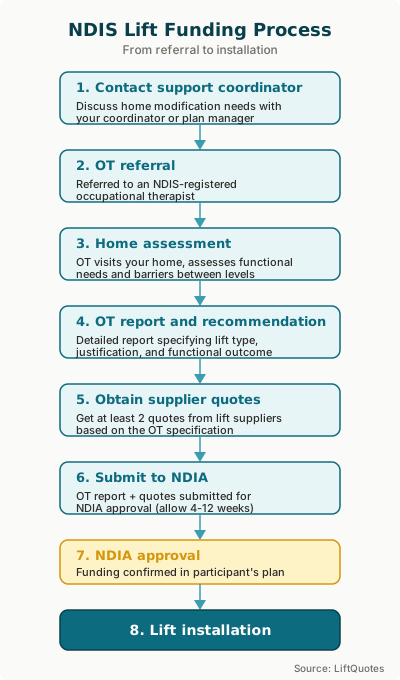
Here is how the process typically works:
- Referral — Your support coordinator, plan manager, or LAC refers you to an NDIS-registered occupational therapist
- Home visit — The OT visits your home to assess your functional needs, the physical environment, and the barriers you face moving between levels
- Report and recommendation — The OT writes a detailed report specifying the type of modification recommended, why it is necessary, and what functional outcome it achieves
- Quotes — You (or your support coordinator) obtain at least two quotes from lift suppliers based on the OT's specification
- NDIA submission — The OT report and quotes are submitted to the NDIA for approval
- Approval and installation — Once approved, the lift supplier and builder proceed with installation
The timeline from OT referral to installation typically runs 3 to 9 months, depending on NDIA processing times, supplier availability, and the complexity of the building works. Plan for the longer end if your home requires structural modifications.
Support at Home (aged care funding)
If you are over 65 and not eligible for the NDIS, the Australian Government's Support at Home programme (which replaced Home Care Packages from July 2025) may fund home modifications including lifts.
Support at Home operates differently from the NDIS. Funding is needs-assessed and allocated through a single assessment process managed by Services Australia. Home modifications — including lifts — fall under the programme's independence and safety supports.
The funding amounts and approval processes differ from the NDIS. Speak with your aged care assessor about whether a lift or platform lift is within scope for your assessed needs. For more information on lifts that support ageing in place, see our guide to home lifts for elderly Australians.
Out-of-pocket costs and co-contributions
The NDIS funds what is reasonable and necessary — not necessarily the exact product you want. Here is where out-of-pocket costs arise:
- Specification upgrades — If the OT recommends a standard platform lift but you prefer a glass-cabin home lift with premium finishes, the NDIS funds up to the cost of the recommended option. You pay the difference.
- Property improvements — If the modification improves the property value beyond the functional need (e.g. a lift that also services a guest level), the NDIA may require a co-contribution.
- Non-disability-related works — Any building work not directly related to the modification (e.g. repainting, replacing flooring beyond the immediate installation area) is your cost.
As of Q2 2026, there is no fixed dollar cap on NDIS home modification funding. Each request is assessed individually based on the OT report and the participant's plan. However, higher-cost modifications receive closer scrutiny and may take longer to approve.
Getting started
If you think an NDIS-funded lift could help you or a family member live more independently at home, the first step is talking to your support coordinator or plan manager about a home modification assessment.
While the NDIS process runs its course, it helps to understand what is available. Browse platform lifts to see the types most commonly funded, or request free quotes from Australian lift suppliers who work with NDIS participants — they can advise on the process from the supplier side.
Start with the OT assessment. Everything else follows from there.
Lift companies in Australia
Browse profiles, compare service areas, and check reviews.

Lift Shop
★ 5.0 (1551 reviews)
Australia's largest dedicated home lift specialist since 1996. 10,000+ installations. Exclusive Italian-crafted lifts with industry-leading 8-year warranty.
View profile →

Compact Home Lifts
NDIS★ 5.0 (465 reviews)
Melbourne branch of Compact Home Lifts. Compact residential lift specialist providing maintenance and repair services across Victoria.
View profile →

Next Level Elevators
★ 5.0 (454 reviews)
Award-winning provider of premium Italian-designed all-electric home elevators. Certified Eltec Partner. Showrooms in Melbourne, Sydney, and Brisbane.
View profile →

Shotton Lifts
NDIS★ 5.0 (9 reviews)
Family-owned Australian lift manufacturer since 1977. 80+ staff. Design, engineer, manufacture, install and service from Dandenong South VIC. NDIS registered.
View profile →

LiftFit Australia
NDIS★ 5.0 (8 reviews)
Victoria-based NDIS registered lift provider, est. 2011. Partners with Cibes, Savaria, and Kalea. Residential, commercial, and platform lifts.
View profile →

Easy Living Home Elevators
★ 5.0 (7 reviews)
Australia's #1 home elevator supplier since 1998. 100% Australian-owned. 11,000+ elevators in service across 6 states.
View profile →
LiftQuotes is a comparison platform. Companies shown are filtered by relevance to this page. Listing does not imply endorsement. LiftQuotes may receive a referral fee when you request quotes.
Put this into action
When you're ready to move forward, get free quotes from verified Australian lift installers.
What are you looking for today?
I need a lift installed
I have a lift that needs attention
What the NDIS covers for lifts and home modifications
The NDIS funds home modifications that are directly related to a participant's disability and help them live more independently at home. Lifts fall under complex home modifications in the Capital Supports budget category.
Complex home modifications require prior approval from the NDIA. This means you cannot install a lift first and claim it back — the assessment, quoting, and approval process must happen before any work begins.
What the NDIS typically covers includes:
- The lift unit itself — purchase and delivery of the recommended equipment
- Installation costs — structural work, electrical connections, and builder coordination
- Building works — shaft construction, floor penetrations, and landing modifications where required
- OT assessment and reports — the occupational therapy assessment is funded separately under Capacity Building
What the NDIS generally does not cover:
- Modifications that add value to the property beyond the participant's functional needs
- Upgrades beyond the OT's recommended specification (e.g. choosing a glass cabin when a standard cabin meets the functional requirement)
- Maintenance and servicing after the warranty period (though some ongoing maintenance may be funded in individual plans)
- Modifications to a property the participant does not own, unless the landlord provides written consent
For a full breakdown of what platform lifts cost — funded or not — see platform lift costs in Australia.
Types of lifts funded under the NDIS
The NDIS does not prescribe a specific lift brand or model. The OT recommends the type of lift based on your functional needs, and the NDIA approves funding for what is reasonable and necessary.
The most commonly funded lift types are:
Platform lifts are the most frequently funded option. They are designed specifically for wheelchair access between levels and comply with AS 1735.12:2020 — the Australian Standard for lifts for persons with disabilities. A platform lift suits homes where the participant uses a wheelchair or mobility aid and needs to move between two levels.
Through-floor lifts (home lifts) may be funded where a platform lift is not suitable — for example, where the travel distance exceeds a platform lift's range or where the home layout requires a different configuration. These are covered by AS/NZS 1735.18:2002.
Stairlifts are sometimes funded as a lower-cost alternative where the participant can transfer to and from a seat safely. They are less commonly approved for wheelchair users because they require a transfer, which may not meet the participant's functional needs.
The OT's recommendation drives the funding decision. If you have a preference for a specific lift type, discuss it with your OT before the assessment report is finalised.
The OT assessment process
Every NDIS-funded lift installation starts with an occupational therapy assessment. This is not optional — without an OT report, the NDIA cannot approve the funding.
Here is how the process typically works:
- Referral — Your support coordinator, plan manager, or LAC refers you to an NDIS-registered occupational therapist
- Home visit — The OT visits your home to assess your functional needs, the physical environment, and the barriers you face moving between levels
- Report and recommendation — The OT writes a detailed report specifying the type of modification recommended, why it is necessary, and what functional outcome it achieves
- Quotes — You (or your support coordinator) obtain at least two quotes from lift suppliers based on the OT's specification
- NDIA submission — The OT report and quotes are submitted to the NDIA for approval
- Approval and installation — Once approved, the lift supplier and builder proceed with installation
The timeline from OT referral to installation typically runs 3 to 9 months, depending on NDIA processing times, supplier availability, and the complexity of the building works. Plan for the longer end if your home requires structural modifications.
Support at Home (aged care funding)
If you are over 65 and not eligible for the NDIS, the Australian Government's Support at Home programme (which replaced Home Care Packages from July 2025) may fund home modifications including lifts.
Support at Home operates differently from the NDIS. Funding is needs-assessed and allocated through a single assessment process managed by Services Australia. Home modifications — including lifts — fall under the programme's independence and safety supports.
The funding amounts and approval processes differ from the NDIS. Speak with your aged care assessor about whether a lift or platform lift is within scope for your assessed needs. For more information on lifts that support ageing in place, see our guide to home lifts for elderly Australians.
Out-of-pocket costs and co-contributions
The NDIS funds what is reasonable and necessary — not necessarily the exact product you want. Here is where out-of-pocket costs arise:
- Specification upgrades — If the OT recommends a standard platform lift but you prefer a glass-cabin home lift with premium finishes, the NDIS funds up to the cost of the recommended option. You pay the difference.
- Property improvements — If the modification improves the property value beyond the functional need (e.g. a lift that also services a guest level), the NDIA may require a co-contribution.
- Non-disability-related works — Any building work not directly related to the modification (e.g. repainting, replacing flooring beyond the immediate installation area) is your cost.
As of Q2 2026, there is no fixed dollar cap on NDIS home modification funding. Each request is assessed individually based on the OT report and the participant's plan. However, higher-cost modifications receive closer scrutiny and may take longer to approve.
Getting started
If you think an NDIS-funded lift could help you or a family member live more independently at home, the first step is talking to your support coordinator or plan manager about a home modification assessment.
While the NDIS process runs its course, it helps to understand what is available. Browse platform lifts to see the types most commonly funded, or request free quotes from Australian lift suppliers who work with NDIS participants — they can advise on the process from the supplier side.
Start with the OT assessment. Everything else follows from there.
Lift companies in Australia
Browse profiles, compare service areas, and check reviews.
Lift Shop
★ 5.0 (1551 reviews)
Australia's largest dedicated home lift specialist since 1996. 10,000+ installations. Exclusive Italian-crafted lifts with industry-leading 8-year warranty.
View profile →
Compact Home Lifts
NDIS★ 5.0 (465 reviews)
Melbourne branch of Compact Home Lifts. Compact residential lift specialist providing maintenance and repair services across Victoria.
View profile →
Next Level Elevators
★ 5.0 (454 reviews)
Award-winning provider of premium Italian-designed all-electric home elevators. Certified Eltec Partner. Showrooms in Melbourne, Sydney, and Brisbane.
View profile →
Shotton Lifts
NDIS★ 5.0 (9 reviews)
Family-owned Australian lift manufacturer since 1977. 80+ staff. Design, engineer, manufacture, install and service from Dandenong South VIC. NDIS registered.
View profile →
LiftFit Australia
NDIS★ 5.0 (8 reviews)
Victoria-based NDIS registered lift provider, est. 2011. Partners with Cibes, Savaria, and Kalea. Residential, commercial, and platform lifts.
View profile →
Easy Living Home Elevators
★ 5.0 (7 reviews)
Australia's #1 home elevator supplier since 1998. 100% Australian-owned. 11,000+ elevators in service across 6 states.
View profile →
LiftQuotes is a comparison platform. Companies shown are filtered by relevance to this page. Listing does not imply endorsement. LiftQuotes may receive a referral fee when you request quotes.
Put this into action
When you're ready to move forward, get free quotes from verified Australian lift installers.
What are you looking for today?
I need a lift installed
I have a lift that needs attention
Home modifications funding
The NDIS funds home modifications under the Capital Supports budget. Lifts fall under complex home modifications, which require an OT assessment, quotes, and NDIA approval before work begins.
OT assessment required
An occupational therapist must assess your home and functional needs. Their report forms the basis of the NDIS funding request and specifies the type of lift or modification recommended.
Platform lifts most commonly funded
Platform lifts and through-floor lifts are the most commonly NDIS-funded lift types for residential use, because they directly address mobility barriers between levels.
Out-of-pocket costs possible
The NDIS funds what is reasonable and necessary. If a participant chooses a higher-specification lift than what the OT recommends, the difference is typically an out-of-pocket cost.
Common questions about NDIS-funded lifts
Yes, the NDIS can fund lifts as complex home modifications under the Capital Supports budget. The lift must be recommended by an occupational therapist as reasonable and necessary for the participant's independence. Platform lifts and through-floor lifts are the most commonly funded types.
Related guides
Location
Commercial Lifts Melbourne: Costs, Compliance & Installers
Commercial lift costs, Victorian OHS compliance and the Melbourne installer market — indicative prices, WorkSafe Victoria rules and NCC requirements for VIC projects.
Location
Commercial Lifts Sydney: Costs, Compliance & Installers
Commercial lift costs, NSW compliance and the Sydney installer market — indicative prices, SafeWork NSW rules and NCC requirements for CBD and metro projects.
Guide
What Size Lift Do I Need for a Wheelchair? (Australia)
A home lift for a wheelchair needs roughly 1,100 x 1,400 mm inside and a 900 mm clear door. See minimum sizes for a wheelchair, a carer, and turning space.
Guide
Support at Home & Lift Funding: The 2026 Guide
Can Support at Home fund a home lift or stairlift? How aged care funding works, the OT assessment, means-tested contributions, and how it differs from the NDIS.
Ready to explore your lift options?
Get free, no-obligation quotes from Australian lift suppliers experienced with NDIS home modifications. They can help you understand what is available and work with your OT and support coordinator.
Join 1,000+ Australians who've requested quotes through LiftQuotes
Get free quotes