
Australian Lift Standards and Compliance Explained
AS 1735, the NCC, WHS plant registration, and DDA access requirements — the three compliance layers every lift owner, facility manager, and developer needs to understand.
Layer A: Building Compliance
NCC + AS 1735 series + building approvals (DA/CC). Governs lift design, installation, and construction certification.
Layer B: Disability Access
Premises Standards 2010 + NCC access provisions + AS 1428.1. Governs when a lift is required and what accessibility features it must have.
Layer C: Workplace Safety
WHS/OHS regulations + plant registration + ongoing inspection. Governs the lift as registrable plant throughout its operational life.
Lift compliance in Australia operates across three distinct regulatory layers — building compliance (NCC and referenced standards), disability access (Premises Standards and DDA), and workplace safety (WHS or OHS plant registration). Confusion between these layers is the most common mistake building owners make, and it can result in failed audits, delayed approvals, or regulatory action.
This guide maps out each layer, the key standards within it, and who enforces what. It is written for facility managers, building owners, strata committees, and commercial developers who need to understand their obligations — not just that obligations exist, but exactly what they require and where to verify them.
The AS 1735 series — what it covers and when it applies
AS 1735 is not a single standard. It is a series published by Standards Australia that covers different lift types, each with its own requirements for design, manufacture, installation, and testing.
The parts most relevant to Australian lift buyers and building owners:
- AS/NZS 1735.18:2002 — passenger lifts in private residences. Covers automatically controlled, small-sized, low-speed lifts. This is the standard that governs home lifts installed in residential properties.
- AS 1735.12:2020 — lifts for persons with disabilities. Sets requirements for accessible lift design in commercial buildings and public premises.
- AS 1735.14 — low-rise platforms for limited mobility applications. Governs platform lifts used for wheelchair access, typically up to 4 metres of travel.
- AS 1735.1 to AS 1735.4 — general requirements for electric and hydraulic passenger and goods lifts in commercial applications.
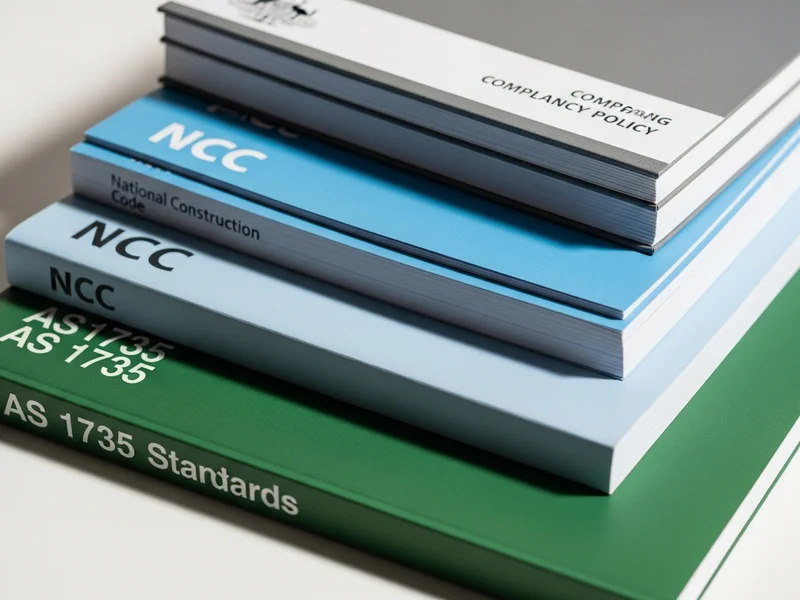
The AS 1735 series is referenced by the NCC, which means compliance with these standards is not optional for new installations — it is a condition of building approval. You can verify current standard designations and purchase copies through the Standards Australia store.
Layer A: NCC and building compliance
The National Construction Code sets the performance requirements for buildings in Australia. For lifts, the NCC references the AS 1735 series as the deemed-to-satisfy solution — meaning a lift that meets the relevant AS 1735 part is considered compliant with the NCC performance requirements.
Building compliance is assessed at the design and installation stage. A building surveyor or certifier verifies that the proposed lift meets NCC requirements before issuing a construction certificate (CC) or occupation certificate (OC). This applies to new installations in both new builds and existing buildings undergoing significant work.
For lift maintenance and ongoing operations, Layer A obligations are largely satisfied at the point of installation — but any modification or modernisation triggers a fresh compliance assessment against current standards.
Layer B: disability access and the Premises Standards
The Disability (Access to Premises — Buildings) Standards 2010 (Premises Standards) reference the NCC and establish when accessible features — including lifts — are required. The Premises Standards work alongside the Disability Discrimination Act 1992 (DDA) to set enforceable access requirements.
Key thresholds that trigger lift requirements in commercial buildings:
- NCC Volume One requires passenger lifts in buildings where the floor area of upper storeys exceeds certain limits, depending on building classification. Class 5 (office), Class 6 (retail), and Class 9 (health care, assembly) buildings are the most commonly affected.
- AS 1428.1:2021 (Design for access and mobility) sets the physical dimensions, controls, and signage requirements for accessible lifts.
- AS 1735.12:2020 specifies the technical requirements for lifts designed for persons with disabilities.
The distinction matters: the NCC tells you when a lift is required. The Premises Standards and DDA tell you what accessibility features that lift must have. A lift can be NCC-compliant but still fail a DDA access complaint if the accessibility features are inadequate.
Building owners who are upgrading or modernising existing lifts should be aware that the Premises Standards apply to new work — which means a lift modernisation project may trigger access compliance obligations that did not exist when the lift was originally installed.
Layer C: WHS plant registration and ongoing obligations
Under Schedule 5 of the Model WHS Regulations, lifts are classified as registrable plant. Both the design and each installed unit require registration with the relevant state or territory regulator. This is an ongoing obligation — not a one-off at installation.
Plant registration requirements include:
- Design registration — before the lift design can be used in Australia, the manufacturer or importer must register the design with a state WHS regulator.
- Item registration — each individual installed lift must be registered in the state where it operates.
- Ongoing inspection — registered plant must be inspected at intervals specified by the regulator. Inspection records must be kept and made available.
State regulators and their frameworks
| State/Territory | Regulator | Framework | |---|---|---| | NSW | SafeWork NSW | WHS (model) | | VIC | WorkSafe Victoria | OHS (not model WHS) | | QLD | Workplace Health and Safety Queensland (WHSQ) | WHS (model) | | WA | WorkSafe Western Australia | WHS (model, from 2022) | | SA | SafeWork SA | WHS (model) | | TAS | WorkSafe Tasmania | WHS (model) | | ACT | WorkSafe ACT | WHS (model) | | NT | NT WorkSafe | WHS (model) |
Victoria is the exception. Victoria did not adopt the model WHS laws and operates under the Occupational Health and Safety Act 2004 and OHS Regulations 2017. Plant registration requirements in Victoria are administered by WorkSafe Victoria under a different regulatory framework. Every compliance programme that covers lifts in multiple states must account for this difference.
Emergency phone compliance — a current obligation
All lift emergency phones in Australia now operate on 4G VoLTE cellular following the full decommissioning of the PSTN copper network. Emergency phone compliance is an ongoing obligation — building owners and facility managers must verify that the monitoring arrangement is active and the 4G connection is functioning.
Emergency phone compliance is typically verified as part of routine lift maintenance or as a specific scope item during modernisation work. This is not a migration task — it is a compliance maintenance item that should be covered in your maintenance contract.
How the three layers interact
A new lift installation in a commercial building will typically engage all three layers simultaneously:
- Layer A — the lift design and installation must comply with the relevant AS 1735 part, verified by a building surveyor as part of the CC/OC process.
- Layer B — if the building triggers DDA access requirements, the lift must meet AS 1735.12 and AS 1428.1 accessibility provisions.
- Layer C — the lift design must be registered, the installed unit must be registered, and ongoing inspection and maintenance records must be maintained.
For existing buildings, the layers may be engaged separately. A maintenance contract covers Layer C obligations. A complaint under the DDA may trigger Layer B assessment. A modernisation project may trigger all three.
Understanding which layer applies to your situation is the first step to managing compliance effectively. If you are unsure, engage a lift consultant or access consultant who can assess your specific obligations.

For commercial lift installations and upgrades, getting quotes from suppliers who understand all three compliance layers will save you time and reduce the risk of costly rework. Get free lift quotes from compliant Australian suppliers.
Lift companies in Australia
Browse profiles, compare service areas, and check reviews.

Lift Shop
★ 5.0 (1551 reviews)
Australia's largest dedicated home lift specialist since 1996. 10,000+ installations. Exclusive Italian-crafted lifts with industry-leading 8-year warranty.
View profile →

Compact Home Lifts
NDIS★ 5.0 (465 reviews)
Melbourne branch of Compact Home Lifts. Compact residential lift specialist providing maintenance and repair services across Victoria.
View profile →

Next Level Elevators
★ 5.0 (454 reviews)
Award-winning provider of premium Italian-designed all-electric home elevators. Certified Eltec Partner. Showrooms in Melbourne, Sydney, and Brisbane.
View profile →

Shotton Lifts
NDIS★ 5.0 (9 reviews)
Family-owned Australian lift manufacturer since 1977. 80+ staff. Design, engineer, manufacture, install and service from Dandenong South VIC. NDIS registered.
View profile →

LiftFit Australia
NDIS★ 5.0 (8 reviews)
Victoria-based NDIS registered lift provider, est. 2011. Partners with Cibes, Savaria, and Kalea. Residential, commercial, and platform lifts.
View profile →

Easy Living Home Elevators
★ 5.0 (7 reviews)
Australia's #1 home elevator supplier since 1998. 100% Australian-owned. 11,000+ elevators in service across 6 states.
View profile →
LiftQuotes is a comparison platform. Companies shown are filtered by relevance to this page. Listing does not imply endorsement. LiftQuotes may receive a referral fee when you request quotes.
Put this into action
When you're ready to move forward, get free quotes from verified Australian lift installers.
What are you looking for today?
I need a lift installed
I have a lift that needs attention
Lift compliance in Australia operates across three distinct regulatory layers — building compliance (NCC and referenced standards), disability access (Premises Standards and DDA), and workplace safety (WHS or OHS plant registration). Confusion between these layers is the most common mistake building owners make, and it can result in failed audits, delayed approvals, or regulatory action.
This guide maps out each layer, the key standards within it, and who enforces what. It is written for facility managers, building owners, strata committees, and commercial developers who need to understand their obligations — not just that obligations exist, but exactly what they require and where to verify them.
The AS 1735 series — what it covers and when it applies
AS 1735 is not a single standard. It is a series published by Standards Australia that covers different lift types, each with its own requirements for design, manufacture, installation, and testing.
The parts most relevant to Australian lift buyers and building owners:
- AS/NZS 1735.18:2002 — passenger lifts in private residences. Covers automatically controlled, small-sized, low-speed lifts. This is the standard that governs home lifts installed in residential properties.
- AS 1735.12:2020 — lifts for persons with disabilities. Sets requirements for accessible lift design in commercial buildings and public premises.
- AS 1735.14 — low-rise platforms for limited mobility applications. Governs platform lifts used for wheelchair access, typically up to 4 metres of travel.
- AS 1735.1 to AS 1735.4 — general requirements for electric and hydraulic passenger and goods lifts in commercial applications.
The AS 1735 series is referenced by the NCC, which means compliance with these standards is not optional for new installations — it is a condition of building approval. You can verify current standard designations and purchase copies through the Standards Australia store.
Layer A: NCC and building compliance
The National Construction Code sets the performance requirements for buildings in Australia. For lifts, the NCC references the AS 1735 series as the deemed-to-satisfy solution — meaning a lift that meets the relevant AS 1735 part is considered compliant with the NCC performance requirements.
Building compliance is assessed at the design and installation stage. A building surveyor or certifier verifies that the proposed lift meets NCC requirements before issuing a construction certificate (CC) or occupation certificate (OC). This applies to new installations in both new builds and existing buildings undergoing significant work.
For lift maintenance and ongoing operations, Layer A obligations are largely satisfied at the point of installation — but any modification or modernisation triggers a fresh compliance assessment against current standards.
Layer B: disability access and the Premises Standards
The Disability (Access to Premises — Buildings) Standards 2010 (Premises Standards) reference the NCC and establish when accessible features — including lifts — are required. The Premises Standards work alongside the Disability Discrimination Act 1992 (DDA) to set enforceable access requirements.
Key thresholds that trigger lift requirements in commercial buildings:
- NCC Volume One requires passenger lifts in buildings where the floor area of upper storeys exceeds certain limits, depending on building classification. Class 5 (office), Class 6 (retail), and Class 9 (health care, assembly) buildings are the most commonly affected.
- AS 1428.1:2021 (Design for access and mobility) sets the physical dimensions, controls, and signage requirements for accessible lifts.
- AS 1735.12:2020 specifies the technical requirements for lifts designed for persons with disabilities.
The distinction matters: the NCC tells you when a lift is required. The Premises Standards and DDA tell you what accessibility features that lift must have. A lift can be NCC-compliant but still fail a DDA access complaint if the accessibility features are inadequate.
Building owners who are upgrading or modernising existing lifts should be aware that the Premises Standards apply to new work — which means a lift modernisation project may trigger access compliance obligations that did not exist when the lift was originally installed.
Layer C: WHS plant registration and ongoing obligations
Under Schedule 5 of the Model WHS Regulations, lifts are classified as registrable plant. Both the design and each installed unit require registration with the relevant state or territory regulator. This is an ongoing obligation — not a one-off at installation.
Plant registration requirements include:
- Design registration — before the lift design can be used in Australia, the manufacturer or importer must register the design with a state WHS regulator.
- Item registration — each individual installed lift must be registered in the state where it operates.
- Ongoing inspection — registered plant must be inspected at intervals specified by the regulator. Inspection records must be kept and made available.
State regulators and their frameworks
| State/Territory | Regulator | Framework | |---|---|---| | NSW | SafeWork NSW | WHS (model) | | VIC | WorkSafe Victoria | OHS (not model WHS) | | QLD | Workplace Health and Safety Queensland (WHSQ) | WHS (model) | | WA | WorkSafe Western Australia | WHS (model, from 2022) | | SA | SafeWork SA | WHS (model) | | TAS | WorkSafe Tasmania | WHS (model) | | ACT | WorkSafe ACT | WHS (model) | | NT | NT WorkSafe | WHS (model) |
Victoria is the exception. Victoria did not adopt the model WHS laws and operates under the Occupational Health and Safety Act 2004 and OHS Regulations 2017. Plant registration requirements in Victoria are administered by WorkSafe Victoria under a different regulatory framework. Every compliance programme that covers lifts in multiple states must account for this difference.
Emergency phone compliance — a current obligation
All lift emergency phones in Australia now operate on 4G VoLTE cellular following the full decommissioning of the PSTN copper network. Emergency phone compliance is an ongoing obligation — building owners and facility managers must verify that the monitoring arrangement is active and the 4G connection is functioning.
Emergency phone compliance is typically verified as part of routine lift maintenance or as a specific scope item during modernisation work. This is not a migration task — it is a compliance maintenance item that should be covered in your maintenance contract.
How the three layers interact
A new lift installation in a commercial building will typically engage all three layers simultaneously:
- Layer A — the lift design and installation must comply with the relevant AS 1735 part, verified by a building surveyor as part of the CC/OC process.
- Layer B — if the building triggers DDA access requirements, the lift must meet AS 1735.12 and AS 1428.1 accessibility provisions.
- Layer C — the lift design must be registered, the installed unit must be registered, and ongoing inspection and maintenance records must be maintained.
For existing buildings, the layers may be engaged separately. A maintenance contract covers Layer C obligations. A complaint under the DDA may trigger Layer B assessment. A modernisation project may trigger all three.
Understanding which layer applies to your situation is the first step to managing compliance effectively. If you are unsure, engage a lift consultant or access consultant who can assess your specific obligations.
For commercial lift installations and upgrades, getting quotes from suppliers who understand all three compliance layers will save you time and reduce the risk of costly rework. Get free lift quotes from compliant Australian suppliers.
Lift companies in Australia
Browse profiles, compare service areas, and check reviews.
Lift Shop
★ 5.0 (1551 reviews)
Australia's largest dedicated home lift specialist since 1996. 10,000+ installations. Exclusive Italian-crafted lifts with industry-leading 8-year warranty.
View profile →
Compact Home Lifts
NDIS★ 5.0 (465 reviews)
Melbourne branch of Compact Home Lifts. Compact residential lift specialist providing maintenance and repair services across Victoria.
View profile →
Next Level Elevators
★ 5.0 (454 reviews)
Award-winning provider of premium Italian-designed all-electric home elevators. Certified Eltec Partner. Showrooms in Melbourne, Sydney, and Brisbane.
View profile →
Shotton Lifts
NDIS★ 5.0 (9 reviews)
Family-owned Australian lift manufacturer since 1977. 80+ staff. Design, engineer, manufacture, install and service from Dandenong South VIC. NDIS registered.
View profile →
LiftFit Australia
NDIS★ 5.0 (8 reviews)
Victoria-based NDIS registered lift provider, est. 2011. Partners with Cibes, Savaria, and Kalea. Residential, commercial, and platform lifts.
View profile →
Easy Living Home Elevators
★ 5.0 (7 reviews)
Australia's #1 home elevator supplier since 1998. 100% Australian-owned. 11,000+ elevators in service across 6 states.
View profile →
LiftQuotes is a comparison platform. Companies shown are filtered by relevance to this page. Listing does not imply endorsement. LiftQuotes may receive a referral fee when you request quotes.
Put this into action
When you're ready to move forward, get free quotes from verified Australian lift installers.
What are you looking for today?
I need a lift installed
I have a lift that needs attention
Frequently Asked Questions About Australian Lift Standards
AS 1735 is a series of Australian Standards published by Standards Australia covering the design, manufacture, installation, and testing of lifts. It includes parts for passenger lifts (AS 1735.1–1735.4), home lifts (AS/NZS 1735.18:2002), lifts for persons with disabilities (AS 1735.12:2020), and low-rise platforms (AS 1735.14). The NCC references these standards as the deemed-to-satisfy solution for lift compliance in buildings.
Related guides
Location
Commercial Lifts Melbourne: Costs, Compliance & Installers
Commercial lift costs, Victorian OHS compliance and the Melbourne installer market — indicative prices, WorkSafe Victoria rules and NCC requirements for VIC projects.
Location
Commercial Lifts Sydney: Costs, Compliance & Installers
Commercial lift costs, NSW compliance and the Sydney installer market — indicative prices, SafeWork NSW rules and NCC requirements for CBD and metro projects.
Guide
What Size Lift Do I Need for a Wheelchair? (Australia)
A home lift for a wheelchair needs roughly 1,100 x 1,400 mm inside and a 900 mm clear door. See minimum sizes for a wheelchair, a carer, and turning space.
Guide
Support at Home & Lift Funding: The 2026 Guide
Can Support at Home fund a home lift or stairlift? How aged care funding works, the OT assessment, means-tested contributions, and how it differs from the NDIS.
Need a compliant lift installation or upgrade?
Connect with Australian lift suppliers who understand AS 1735, NCC, and WHS compliance requirements. Free quotes, no obligation.
Join 1,000+ Australians who've requested quotes through LiftQuotes
Get free lift quotes