
Outdoor Lifts for Homes in Australia
Yes, you can install a lift outside your home. Outdoor platform lifts, external shaft home lifts, and outdoor stairlifts are all available in Australia — with the right weatherproofing for your climate.
An outdoor lift is a practical solution when an internal lift is not possible — whether because of limited indoor space, a split-level block, or a separate building you need access to. Three types suit Australian outdoor installations: platform lifts, external shaft home lifts, and outdoor stairlifts.
The key difference between an outdoor lift and an indoor one is weatherproofing. Materials, IP ratings, and corrosion protection all need to match your climate — tropical humidity in Queensland demands different specifications from coastal salt exposure in Perth or Sydney. This guide covers the types available, what weatherproofing actually involves, and what you should expect to pay.
Types of outdoor lifts
Three lift types are commonly installed outdoors in Australian homes. Each suits different situations, and the right choice depends on the travel distance, whether the user needs wheelchair access, and how exposed the site is to weather.
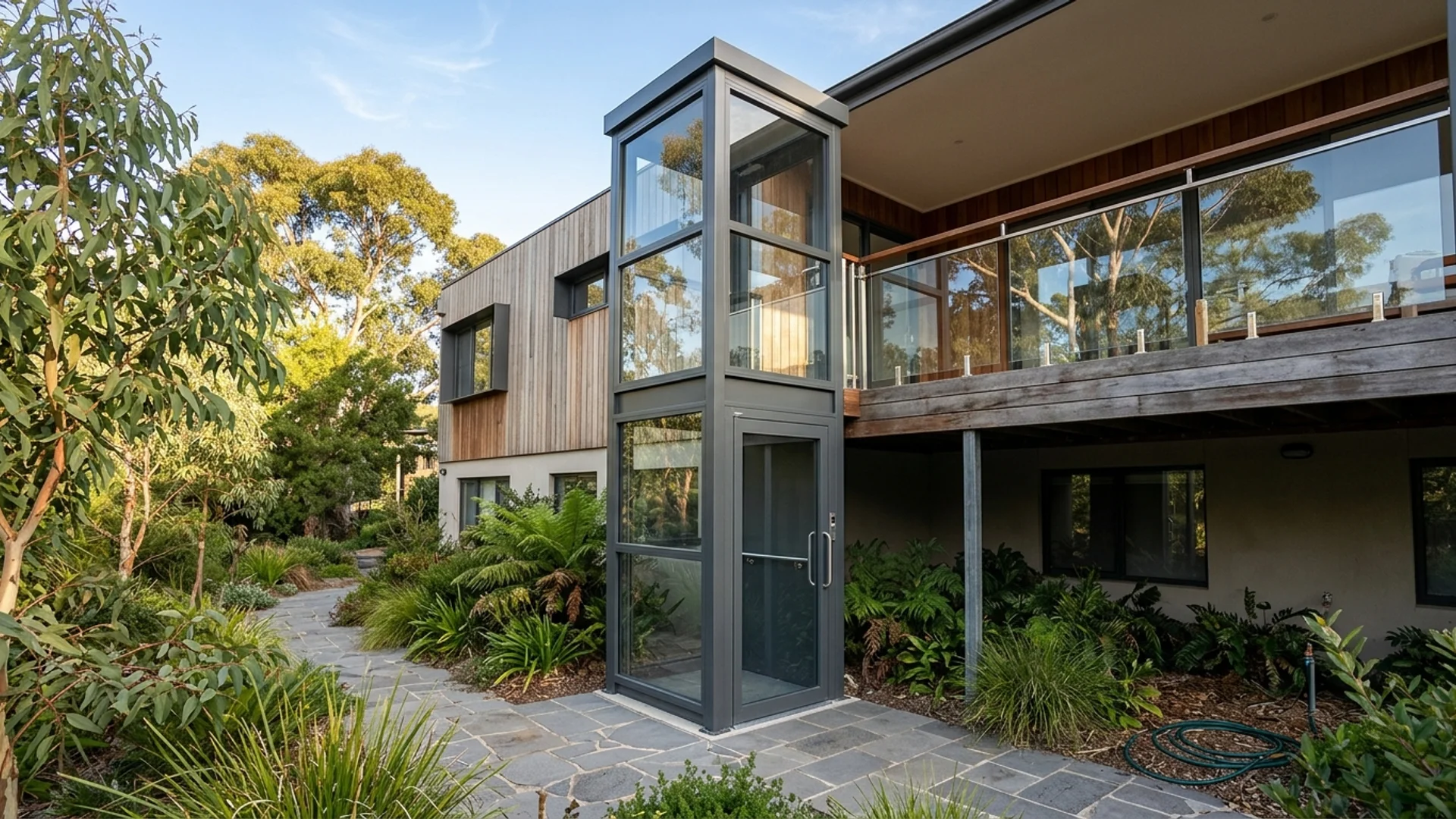
Outdoor platform lifts are the most common choice for external installations. They travel vertically between two levels — typically from ground to a deck, veranda, or first floor. Most comply with AS 1735.14, the Australian Standard for low-rise platforms. Platform lifts handle wheelchair access well, require minimal structural preparation, and are available in fully enclosed or open configurations. An enclosed model with weather-rated panels and a canopy is the standard approach for exposed sites.
External shaft home lifts are full cabin lifts installed in a self-supporting shaft structure fixed to the outside of the building. These handle multi-storey travel (up to four floors) and are covered by AS/NZS 1735.18:2002 — the standard for passenger lifts in private residences. The shaft itself is typically galvanised or powder-coated steel with insulated cladding. This is the option for homes where internal space genuinely cannot accommodate a shaft but multi-floor access is needed.
Outdoor stairlifts mount to an external staircase — common for rear garden access, pool areas, or elevated entries. They are the lowest-cost outdoor option but only suit ambulant users who can transfer to and from a seat.

Weatherproofing: what to specify
An outdoor lift needs protection against water ingress, UV degradation, corrosion, and temperature extremes. The specification depends on your site, and cutting corners on materials is the single most common mistake with outdoor installations.
IP ratings indicate how well an enclosure resists dust and water. For outdoor lifts, the minimum practical ratings are:
- IP55 — protected against dust ingress and low-pressure water jets from any direction. Required for platform lifts and stairlifts in exposed positions.
- IP44 — protected against solid objects over 1mm and splashing water. Acceptable for external shaft lifts with covered landings that shield the lift from direct rain.
The IP rating applies to the electrical components, control panels, and call stations — not just the lift cabin. Make sure the supplier specifies the IP rating for all external components, not just the main unit.
Corrosion protection varies by lift type. Marine-grade stainless steel (316 grade) is essential for coastal locations within 1 km of the shoreline. Galvanised steel with powder coating is adequate for most inland and suburban locations. Anodised aluminium is used on outdoor stairlift rails and lightweight platform components.
UV protection matters for any component that sits in direct sunlight. Polycarbonate panels, rubber seals, and plastic fittings degrade under sustained UV exposure. Ask the supplier about UV-stabilised materials if the lift faces north or west.
Climate considerations by region
Australia's climate range means there is no single outdoor lift specification that works everywhere. Here is what to consider by region:
Queensland and the Top End — Tropical humidity accelerates corrosion and promotes mould growth on surfaces. Specify IP55 minimum, marine-grade fixings, and drainage provisions so water does not pool on the platform. Cyclone-rated fastening may be required in northern coastal areas.
Sydney and the NSW coast — Coastal salt exposure is the main concern, particularly east of the Great Western Highway. Marine-grade stainless steel components are worth the premium for any installation within 5 km of the coast. Salt spray combined with summer humidity creates aggressive conditions for standard galvanised steel.
Perth and the WA coast — Similar salt exposure to Sydney, with the added factor of extreme summer heat. Thermal expansion in steel shaft components needs to be accounted for in design. UV-stabilised materials are critical on west-facing installations.
Melbourne and southern Victoria — Frost, rain, and wind are the primary concerns rather than salt or humidity. IP44 is often sufficient for sheltered installations, though IP55 remains the safer specification. Wind loading on an external shaft should be calculated by the structural engineer.
Adelaide and inland areas — Dust and temperature extremes dominate. IP ratings matter more for dust protection than water ingress. Thermal cycling (hot days, cool nights) stresses seals and joints over time.
What outdoor lifts cost
As of Q2 2026, indicative cost ranges for outdoor lift installations in Australia are:
- Outdoor platform lift: $25,000 to $50,000 installed, depending on travel height, enclosure type, and site access
- External shaft home lift: $35,000 to $85,000 installed, including the shaft structure, cladding, and weatherproofing
- Outdoor stairlift: $5,500 to $15,000 installed, depending on rail length and whether the staircase is straight or curved
These ranges include the weather-protection premium — typically 10 to 25% above the equivalent indoor installation. The premium covers upgraded materials, additional sealing, and the external shaft or mounting structure. Building works (foundations, structural connections, electrical supply to the external location) are additional and vary significantly by site.
For a detailed breakdown of home lift costs including equipment, shaft construction, and installation labour, see our cost guide. If you are specifically considering a platform lift for wheelchair access, the platform lift category page covers compliance requirements and cost ranges.
Installation and council approvals
An outdoor lift installation involves structural work that generally requires council approval. The pathway depends on your state and the scope of the work.
In most states, a development application (DA) or complying development certificate (CDC) is required when the installation:
- Adds a new external structure (the shaft or platform enclosure)
- Changes the building's external appearance or footprint
- Exceeds height limits for exempt development
Heritage overlays, flood zone restrictions, and bushfire requirements can add complexity. Check with your local council before committing to a supplier.
The structural preparation for an outdoor lift typically includes a concrete footing or pad, connection brackets to the existing building, and electrical supply run to the external location. For a full guide to home lift installation stages and timelines, including what to expect from site assessment through to commissioning, see our installation guide.
Expect the installation timeline to run 6 to 16 weeks from approval to commissioning — longer if the council approval process is slow or if the building works are complex.
If you are weighing up whether an outdoor lift suits your home, the next step is getting site-specific advice. Request free quotes from Australian lift suppliers who install outdoor systems — they can assess your site, recommend the right weatherproofing specification, and provide a fixed-price proposal.
Lift companies in Australia
Browse profiles, compare service areas, and check reviews.

Lift Shop
★ 5.0 (1551 reviews)
Australia's largest dedicated home lift specialist since 1996. 10,000+ installations. Exclusive Italian-crafted lifts with industry-leading 8-year warranty.
View profile →

Compact Home Lifts
NDIS★ 5.0 (465 reviews)
Melbourne branch of Compact Home Lifts. Compact residential lift specialist providing maintenance and repair services across Victoria.
View profile →

Next Level Elevators
★ 5.0 (454 reviews)
Award-winning provider of premium Italian-designed all-electric home elevators. Certified Eltec Partner. Showrooms in Melbourne, Sydney, and Brisbane.
View profile →

Shotton Lifts
NDIS★ 5.0 (9 reviews)
Family-owned Australian lift manufacturer since 1977. 80+ staff. Design, engineer, manufacture, install and service from Dandenong South VIC. NDIS registered.
View profile →

LiftFit Australia
NDIS★ 5.0 (8 reviews)
Victoria-based NDIS registered lift provider, est. 2011. Partners with Cibes, Savaria, and Kalea. Residential, commercial, and platform lifts.
View profile →

Easy Living Home Elevators
★ 5.0 (7 reviews)
Australia's #1 home elevator supplier since 1998. 100% Australian-owned. 11,000+ elevators in service across 6 states.
View profile →
LiftQuotes is a comparison platform. Companies shown are filtered by relevance to this page. Listing does not imply endorsement. LiftQuotes may receive a referral fee when you request quotes.
Put this into action
When you're ready to move forward, get free quotes from verified Australian lift installers.
What are you looking for today?
I need a lift installed
I have a lift that needs attention
An outdoor lift is a practical solution when an internal lift is not possible — whether because of limited indoor space, a split-level block, or a separate building you need access to. Three types suit Australian outdoor installations: platform lifts, external shaft home lifts, and outdoor stairlifts.
The key difference between an outdoor lift and an indoor one is weatherproofing. Materials, IP ratings, and corrosion protection all need to match your climate — tropical humidity in Queensland demands different specifications from coastal salt exposure in Perth or Sydney. This guide covers the types available, what weatherproofing actually involves, and what you should expect to pay.
Types of outdoor lifts
Three lift types are commonly installed outdoors in Australian homes. Each suits different situations, and the right choice depends on the travel distance, whether the user needs wheelchair access, and how exposed the site is to weather.
Outdoor platform lifts are the most common choice for external installations. They travel vertically between two levels — typically from ground to a deck, veranda, or first floor. Most comply with AS 1735.14, the Australian Standard for low-rise platforms. Platform lifts handle wheelchair access well, require minimal structural preparation, and are available in fully enclosed or open configurations. An enclosed model with weather-rated panels and a canopy is the standard approach for exposed sites.
External shaft home lifts are full cabin lifts installed in a self-supporting shaft structure fixed to the outside of the building. These handle multi-storey travel (up to four floors) and are covered by AS/NZS 1735.18:2002 — the standard for passenger lifts in private residences. The shaft itself is typically galvanised or powder-coated steel with insulated cladding. This is the option for homes where internal space genuinely cannot accommodate a shaft but multi-floor access is needed.
Outdoor stairlifts mount to an external staircase — common for rear garden access, pool areas, or elevated entries. They are the lowest-cost outdoor option but only suit ambulant users who can transfer to and from a seat.
Weatherproofing: what to specify
An outdoor lift needs protection against water ingress, UV degradation, corrosion, and temperature extremes. The specification depends on your site, and cutting corners on materials is the single most common mistake with outdoor installations.
IP ratings indicate how well an enclosure resists dust and water. For outdoor lifts, the minimum practical ratings are:
- IP55 — protected against dust ingress and low-pressure water jets from any direction. Required for platform lifts and stairlifts in exposed positions.
- IP44 — protected against solid objects over 1mm and splashing water. Acceptable for external shaft lifts with covered landings that shield the lift from direct rain.
The IP rating applies to the electrical components, control panels, and call stations — not just the lift cabin. Make sure the supplier specifies the IP rating for all external components, not just the main unit.
Corrosion protection varies by lift type. Marine-grade stainless steel (316 grade) is essential for coastal locations within 1 km of the shoreline. Galvanised steel with powder coating is adequate for most inland and suburban locations. Anodised aluminium is used on outdoor stairlift rails and lightweight platform components.
UV protection matters for any component that sits in direct sunlight. Polycarbonate panels, rubber seals, and plastic fittings degrade under sustained UV exposure. Ask the supplier about UV-stabilised materials if the lift faces north or west.
Climate considerations by region
Australia's climate range means there is no single outdoor lift specification that works everywhere. Here is what to consider by region:
Queensland and the Top End — Tropical humidity accelerates corrosion and promotes mould growth on surfaces. Specify IP55 minimum, marine-grade fixings, and drainage provisions so water does not pool on the platform. Cyclone-rated fastening may be required in northern coastal areas.
Sydney and the NSW coast — Coastal salt exposure is the main concern, particularly east of the Great Western Highway. Marine-grade stainless steel components are worth the premium for any installation within 5 km of the coast. Salt spray combined with summer humidity creates aggressive conditions for standard galvanised steel.
Perth and the WA coast — Similar salt exposure to Sydney, with the added factor of extreme summer heat. Thermal expansion in steel shaft components needs to be accounted for in design. UV-stabilised materials are critical on west-facing installations.
Melbourne and southern Victoria — Frost, rain, and wind are the primary concerns rather than salt or humidity. IP44 is often sufficient for sheltered installations, though IP55 remains the safer specification. Wind loading on an external shaft should be calculated by the structural engineer.
Adelaide and inland areas — Dust and temperature extremes dominate. IP ratings matter more for dust protection than water ingress. Thermal cycling (hot days, cool nights) stresses seals and joints over time.
What outdoor lifts cost
As of Q2 2026, indicative cost ranges for outdoor lift installations in Australia are:
- Outdoor platform lift: $25,000 to $50,000 installed, depending on travel height, enclosure type, and site access
- External shaft home lift: $35,000 to $85,000 installed, including the shaft structure, cladding, and weatherproofing
- Outdoor stairlift: $5,500 to $15,000 installed, depending on rail length and whether the staircase is straight or curved
These ranges include the weather-protection premium — typically 10 to 25% above the equivalent indoor installation. The premium covers upgraded materials, additional sealing, and the external shaft or mounting structure. Building works (foundations, structural connections, electrical supply to the external location) are additional and vary significantly by site.
For a detailed breakdown of home lift costs including equipment, shaft construction, and installation labour, see our cost guide. If you are specifically considering a platform lift for wheelchair access, the platform lift category page covers compliance requirements and cost ranges.
Installation and council approvals
An outdoor lift installation involves structural work that generally requires council approval. The pathway depends on your state and the scope of the work.
In most states, a development application (DA) or complying development certificate (CDC) is required when the installation:
- Adds a new external structure (the shaft or platform enclosure)
- Changes the building's external appearance or footprint
- Exceeds height limits for exempt development
Heritage overlays, flood zone restrictions, and bushfire requirements can add complexity. Check with your local council before committing to a supplier.
The structural preparation for an outdoor lift typically includes a concrete footing or pad, connection brackets to the existing building, and electrical supply run to the external location. For a full guide to home lift installation stages and timelines, including what to expect from site assessment through to commissioning, see our installation guide.
Expect the installation timeline to run 6 to 16 weeks from approval to commissioning — longer if the council approval process is slow or if the building works are complex.
If you are weighing up whether an outdoor lift suits your home, the next step is getting site-specific advice. Request free quotes from Australian lift suppliers who install outdoor systems — they can assess your site, recommend the right weatherproofing specification, and provide a fixed-price proposal.
Lift companies in Australia
Browse profiles, compare service areas, and check reviews.
Lift Shop
★ 5.0 (1551 reviews)
Australia's largest dedicated home lift specialist since 1996. 10,000+ installations. Exclusive Italian-crafted lifts with industry-leading 8-year warranty.
View profile →
Compact Home Lifts
NDIS★ 5.0 (465 reviews)
Melbourne branch of Compact Home Lifts. Compact residential lift specialist providing maintenance and repair services across Victoria.
View profile →
Next Level Elevators
★ 5.0 (454 reviews)
Award-winning provider of premium Italian-designed all-electric home elevators. Certified Eltec Partner. Showrooms in Melbourne, Sydney, and Brisbane.
View profile →
Shotton Lifts
NDIS★ 5.0 (9 reviews)
Family-owned Australian lift manufacturer since 1977. 80+ staff. Design, engineer, manufacture, install and service from Dandenong South VIC. NDIS registered.
View profile →
LiftFit Australia
NDIS★ 5.0 (8 reviews)
Victoria-based NDIS registered lift provider, est. 2011. Partners with Cibes, Savaria, and Kalea. Residential, commercial, and platform lifts.
View profile →
Easy Living Home Elevators
★ 5.0 (7 reviews)
Australia's #1 home elevator supplier since 1998. 100% Australian-owned. 11,000+ elevators in service across 6 states.
View profile →
LiftQuotes is a comparison platform. Companies shown are filtered by relevance to this page. Listing does not imply endorsement. LiftQuotes may receive a referral fee when you request quotes.
Put this into action
When you're ready to move forward, get free quotes from verified Australian lift installers.
What are you looking for today?
I need a lift installed
I have a lift that needs attention
Three outdoor lift types
Outdoor platform lifts for wheelchair access and split-level entry, external shaft home lifts for multi-storey travel, and outdoor stairlifts for single-user stair access. Each has different weatherproofing and cost profiles.
Weatherproofing is the critical factor
IP ratings, corrosion-resistant materials, and UV protection determine how long an outdoor lift lasts. Specify the right protection for your location — not just the cheapest option.
Cost premium over indoor lifts
Expect a 5-25% premium over equivalent indoor installations, depending on the lift type and the level of weather protection required. As of Q2 2026, outdoor platform lifts start from around $25,000 installed.
Council approval usually required
Most outdoor lift installations need a development application or complying development certificate. External structures that change a building's footprint or height typically trigger planning requirements.
Common questions about outdoor lifts
Yes. Outdoor platform lifts, external shaft home lifts, and outdoor stairlifts are all available for Australian homes. The lift needs to be specified with appropriate weatherproofing — IP-rated components, corrosion-resistant materials, and UV protection — matched to your climate and site conditions.
Related guides
Location
Commercial Lifts Melbourne: Costs, Compliance & Installers
Commercial lift costs, Victorian OHS compliance and the Melbourne installer market — indicative prices, WorkSafe Victoria rules and NCC requirements for VIC projects.
Location
Commercial Lifts Sydney: Costs, Compliance & Installers
Commercial lift costs, NSW compliance and the Sydney installer market — indicative prices, SafeWork NSW rules and NCC requirements for CBD and metro projects.
Guide
What Size Lift Do I Need for a Wheelchair? (Australia)
A home lift for a wheelchair needs roughly 1,100 x 1,400 mm inside and a 900 mm clear door. See minimum sizes for a wheelchair, a carer, and turning space.
Guide
Support at Home & Lift Funding: The 2026 Guide
Can Support at Home fund a home lift or stairlift? How aged care funding works, the OT assessment, means-tested contributions, and how it differs from the NDIS.
Ready to explore outdoor lift options?
Get free, no-obligation quotes from Australian lift suppliers who install outdoor platform lifts, external shaft lifts, and outdoor stairlifts. They will assess your site and recommend the right weatherproofing for your location.
Join 1,000+ Australians who've requested quotes through LiftQuotes
Get free quotes