Lift Plant Registration: State-by-State Requirements
Every lift installed in Australia must be registered as plant under workplace safety law. The process, the regulator, and even the legal framework differ by state — and Victoria is the exception to almost everything.
Two registrations, not one
Every lift requires design registration (the lift model/design is approved) and item registration (each installed unit is individually registered). Both must be completed before the lift enters service.
Schedule 5 is the trigger
The Model WHS Regulations Schedule 5 lists lifts and escalators as registrable plant. This is the legal basis for registration requirements in all states except Victoria.
Victoria uses OHS, not WHS
Victoria did not adopt the model WHS laws. Lift plant registration in Victoria is governed by the OHS Regulations 2017 under WorkSafe Victoria — the process and terminology differ.
The owner holds the obligation
The PCBU (person conducting a business or undertaking) — typically the building owner or managing body — is responsible for ensuring registrations are current. This is not delegated to the lift installer by default.
Lifts are classified as registrable plant under Australian workplace safety law. That means two separate registrations are required before a lift can operate: design registration (for the lift design itself) and item registration (for each individual installed unit). The obligation sits with the person conducting a business or undertaking (PCBU) — in practice, usually the building owner or the body managing the building.
The registration framework comes from the Model Work Health and Safety (WHS) Regulations, specifically Schedule 5, which lists lifts, escalators, and moving walkways as plant requiring both design and item registration. Every state and territory has adopted this framework — except Victoria, which operates under its own Occupational Health and Safety Act 2004 and OHS Regulations 2017.
This guide covers what plant registration involves, the design vs item registration distinction, and the specific requirements in each state and territory. If you are installing, managing, or maintaining a lift, registration is not optional — and non-compliance carries significant penalties under both WHS and OHS law.
What is lift plant registration?
Plant registration is the legal process of recording a lift with the workplace safety regulator in the state or territory where it is installed. It exists to ensure every lift in service has been designed to an approved standard and that each installed unit has been inspected and verified as safe.
The requirement applies to all lifts covered by the AS 1735 series — passenger lifts, goods lifts, platform lifts, escalators, and moving walkways. Residential home lifts covered by AS/NZS 1735.18:2002 are included where they are installed in a workplace or a building covered by WHS/OHS obligations. A residential home lift in a private house used solely as a home is generally not captured by WHS plant registration — but the design registration obligation still applies to the manufacturer or importer of the lift.
For a detailed overview of how plant registration fits within the broader Australian lift standards framework, including building compliance (Layer A) and disability access (Layer B), see the full standards guide.
Design registration vs item registration
These are two distinct processes that serve different purposes.
Design registration verifies that the lift design meets the relevant Australian Standards. The applicant is usually the manufacturer, importer, or supplier of the lift — not the building owner. A single design registration covers all units manufactured to that design. The regulator issues a design registration number, which must be referenced when registering individual items.
Item registration is for each physical lift installed at a specific site. The applicant is the PCBU responsible for the plant at the workplace — typically the building owner or managing body. The application requires proof that the lift has been installed in accordance with the registered design, that a competent person has inspected and commissioned it, and that all required documentation (installation certificate, test certificates, compliance plates) is in order.
Both registrations must be in place before the lift enters service. Operating an unregistered lift is a breach of WHS/OHS law and can result in prohibition notices, improvement notices, and substantial fines.
State-by-state registration requirements
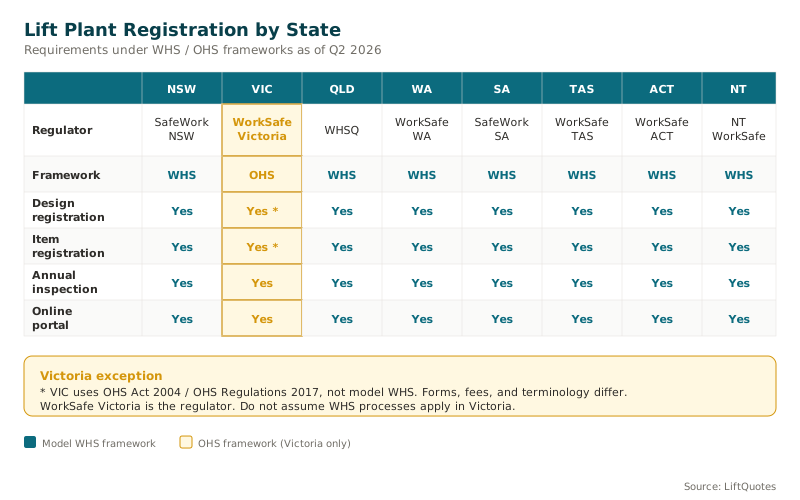
All states and territories require lift plant registration, but each jurisdiction has its own regulator, portal, and process. As of Q2 2026, the following applies.
New South Wales
Regulator: SafeWork NSW Framework: Model WHS Process: Online plant registration through the SafeWork NSW portal. Design registration applications are assessed against the AS 1735 series. Item registration requires an installation certificate from a competent person and supporting documentation. SafeWork NSW conducts periodic inspections.
Victoria
Regulator: WorkSafe Victoria Framework: Occupational Health and Safety Act 2004 / OHS Regulations 2017 Key difference: Victoria did not adopt the model WHS laws. Plant registration is governed by Part 3.4 of the OHS Regulations 2017. The terminology differs — Victoria uses "registration" and "design notification" rather than the WHS "design registration" and "item registration" language. WorkSafe Victoria maintains its own online portal for plant registration. The obligations are substantively similar to the WHS model, but the forms, fees, and processes are Victoria-specific. If you manage lifts across multiple states, do not assume a WHS registration process applies in Victoria.
Queensland
Regulator: Workplace Health and Safety Queensland (WHSQ) Framework: Model WHS Process: Online applications through the WHSQ portal. Queensland follows the model WHS framework closely. Design registration is assessed against the relevant standards, and item registration requires a competent person inspection certificate.
Western Australia
Regulator: WorkSafe Western Australia Framework: Model WHS (adopted from 2022) Process: WA transitioned to the model WHS framework in 2022, replacing the previous Occupational Safety and Health Act 1984. Plant registration for lifts now follows the model WHS approach. Applications are submitted through the WorkSafe WA portal.
South Australia
Regulator: SafeWork SA Framework: Model WHS Process: Online registration through the SafeWork SA portal. Standard model WHS process.
Tasmania
Regulator: WorkSafe Tasmania Framework: Model WHS Process: Applications submitted through the WorkSafe Tasmania portal.
Australian Capital Territory
Regulator: WorkSafe ACT Framework: Model WHS Process: Applications through the WorkSafe ACT portal.
Northern Territory
Regulator: NT WorkSafe Framework: Model WHS Process: Applications through the NT WorkSafe portal.
Ongoing obligations after registration
Registration is not a one-off task. Building owners and managing bodies have ongoing obligations that continue for the life of the lift.
Routine maintenance must be performed by a competent person at intervals specified by the manufacturer and the relevant standard. For a breakdown of what lift maintenance contracts typically cover and cost, see the maintenance guide.
Periodic inspections are required under WHS/OHS regulations. The frequency varies by jurisdiction, but annual inspection by a competent person is the minimum standard in most states. Inspection records must be kept and made available to the regulator on request.
Notification of alterations is required if the lift is modified in any way that differs from the registered design. This can trigger a new design registration or a variation to the existing registration. Major lift modernisation projects — replacing controllers, doors, or drive systems — will typically require updated registration.
Incident reporting is mandatory. Any notifiable incident involving a lift (serious injury, dangerous occurrence, or death) must be reported to the regulator immediately. The site must be preserved until an inspector authorises otherwise.
What happens if a lift is not registered?
Operating an unregistered lift is a serious offence. The regulator can issue a prohibition notice requiring immediate cessation of use, an improvement notice requiring registration within a specified timeframe, or prosecution for breach of WHS/OHS duties. Penalties vary by jurisdiction but can reach hundreds of thousands of dollars for a body corporate.
For commercial lift installations in particular, the registration status is often checked during building certification, insurance assessments, and due diligence for property transactions. An unregistered lift is a material compliance gap.
If you are installing a new lift or need to verify the registration status of an existing lift, get free quotes from qualified lift installers who can advise on registration requirements in your state.
Lift companies in Australia
Browse profiles, compare service areas, and check reviews.

Lift Shop
★ 5.0 (1551 reviews)
Australia's largest dedicated home lift specialist since 1996. 10,000+ installations. Exclusive Italian-crafted lifts with industry-leading 8-year warranty.
View profile →

Compact Home Lifts
NDIS★ 5.0 (465 reviews)
Melbourne branch of Compact Home Lifts. Compact residential lift specialist providing maintenance and repair services across Victoria.
View profile →

Next Level Elevators
★ 5.0 (454 reviews)
Award-winning provider of premium Italian-designed all-electric home elevators. Certified Eltec Partner. Showrooms in Melbourne, Sydney, and Brisbane.
View profile →

Shotton Lifts
NDIS★ 5.0 (9 reviews)
Family-owned Australian lift manufacturer since 1977. 80+ staff. Design, engineer, manufacture, install and service from Dandenong South VIC. NDIS registered.
View profile →

LiftFit Australia
NDIS★ 5.0 (8 reviews)
Victoria-based NDIS registered lift provider, est. 2011. Partners with Cibes, Savaria, and Kalea. Residential, commercial, and platform lifts.
View profile →

Easy Living Home Elevators
★ 5.0 (7 reviews)
Australia's #1 home elevator supplier since 1998. 100% Australian-owned. 11,000+ elevators in service across 6 states.
View profile →
LiftQuotes is a comparison platform. Companies shown are filtered by relevance to this page. Listing does not imply endorsement. LiftQuotes may receive a referral fee when you request quotes.
Put this into action
When you're ready to move forward, get free quotes from verified Australian lift installers.
What are you looking for today?
I need a lift installed
I have a lift that needs attention
Lifts are classified as registrable plant under Australian workplace safety law. That means two separate registrations are required before a lift can operate: design registration (for the lift design itself) and item registration (for each individual installed unit). The obligation sits with the person conducting a business or undertaking (PCBU) — in practice, usually the building owner or the body managing the building.
The registration framework comes from the Model Work Health and Safety (WHS) Regulations, specifically Schedule 5, which lists lifts, escalators, and moving walkways as plant requiring both design and item registration. Every state and territory has adopted this framework — except Victoria, which operates under its own Occupational Health and Safety Act 2004 and OHS Regulations 2017.
This guide covers what plant registration involves, the design vs item registration distinction, and the specific requirements in each state and territory. If you are installing, managing, or maintaining a lift, registration is not optional — and non-compliance carries significant penalties under both WHS and OHS law.
What is lift plant registration?
Plant registration is the legal process of recording a lift with the workplace safety regulator in the state or territory where it is installed. It exists to ensure every lift in service has been designed to an approved standard and that each installed unit has been inspected and verified as safe.
The requirement applies to all lifts covered by the AS 1735 series — passenger lifts, goods lifts, platform lifts, escalators, and moving walkways. Residential home lifts covered by AS/NZS 1735.18:2002 are included where they are installed in a workplace or a building covered by WHS/OHS obligations. A residential home lift in a private house used solely as a home is generally not captured by WHS plant registration — but the design registration obligation still applies to the manufacturer or importer of the lift.
For a detailed overview of how plant registration fits within the broader Australian lift standards framework, including building compliance (Layer A) and disability access (Layer B), see the full standards guide.
Design registration vs item registration
These are two distinct processes that serve different purposes.
Design registration verifies that the lift design meets the relevant Australian Standards. The applicant is usually the manufacturer, importer, or supplier of the lift — not the building owner. A single design registration covers all units manufactured to that design. The regulator issues a design registration number, which must be referenced when registering individual items.
Item registration is for each physical lift installed at a specific site. The applicant is the PCBU responsible for the plant at the workplace — typically the building owner or managing body. The application requires proof that the lift has been installed in accordance with the registered design, that a competent person has inspected and commissioned it, and that all required documentation (installation certificate, test certificates, compliance plates) is in order.
Both registrations must be in place before the lift enters service. Operating an unregistered lift is a breach of WHS/OHS law and can result in prohibition notices, improvement notices, and substantial fines.
State-by-state registration requirements
All states and territories require lift plant registration, but each jurisdiction has its own regulator, portal, and process. As of Q2 2026, the following applies.
New South Wales
Regulator: SafeWork NSW Framework: Model WHS Process: Online plant registration through the SafeWork NSW portal. Design registration applications are assessed against the AS 1735 series. Item registration requires an installation certificate from a competent person and supporting documentation. SafeWork NSW conducts periodic inspections.
Victoria
Regulator: WorkSafe Victoria Framework: Occupational Health and Safety Act 2004 / OHS Regulations 2017 Key difference: Victoria did not adopt the model WHS laws. Plant registration is governed by Part 3.4 of the OHS Regulations 2017. The terminology differs — Victoria uses "registration" and "design notification" rather than the WHS "design registration" and "item registration" language. WorkSafe Victoria maintains its own online portal for plant registration. The obligations are substantively similar to the WHS model, but the forms, fees, and processes are Victoria-specific. If you manage lifts across multiple states, do not assume a WHS registration process applies in Victoria.
Queensland
Regulator: Workplace Health and Safety Queensland (WHSQ) Framework: Model WHS Process: Online applications through the WHSQ portal. Queensland follows the model WHS framework closely. Design registration is assessed against the relevant standards, and item registration requires a competent person inspection certificate.
Western Australia
Regulator: WorkSafe Western Australia Framework: Model WHS (adopted from 2022) Process: WA transitioned to the model WHS framework in 2022, replacing the previous Occupational Safety and Health Act 1984. Plant registration for lifts now follows the model WHS approach. Applications are submitted through the WorkSafe WA portal.
South Australia
Regulator: SafeWork SA Framework: Model WHS Process: Online registration through the SafeWork SA portal. Standard model WHS process.
Tasmania
Regulator: WorkSafe Tasmania Framework: Model WHS Process: Applications submitted through the WorkSafe Tasmania portal.
Australian Capital Territory
Regulator: WorkSafe ACT Framework: Model WHS Process: Applications through the WorkSafe ACT portal.
Northern Territory
Regulator: NT WorkSafe Framework: Model WHS Process: Applications through the NT WorkSafe portal.
Ongoing obligations after registration
Registration is not a one-off task. Building owners and managing bodies have ongoing obligations that continue for the life of the lift.
Routine maintenance must be performed by a competent person at intervals specified by the manufacturer and the relevant standard. For a breakdown of what lift maintenance contracts typically cover and cost, see the maintenance guide.
Periodic inspections are required under WHS/OHS regulations. The frequency varies by jurisdiction, but annual inspection by a competent person is the minimum standard in most states. Inspection records must be kept and made available to the regulator on request.
Notification of alterations is required if the lift is modified in any way that differs from the registered design. This can trigger a new design registration or a variation to the existing registration. Major lift modernisation projects — replacing controllers, doors, or drive systems — will typically require updated registration.
Incident reporting is mandatory. Any notifiable incident involving a lift (serious injury, dangerous occurrence, or death) must be reported to the regulator immediately. The site must be preserved until an inspector authorises otherwise.
What happens if a lift is not registered?
Operating an unregistered lift is a serious offence. The regulator can issue a prohibition notice requiring immediate cessation of use, an improvement notice requiring registration within a specified timeframe, or prosecution for breach of WHS/OHS duties. Penalties vary by jurisdiction but can reach hundreds of thousands of dollars for a body corporate.
For commercial lift installations in particular, the registration status is often checked during building certification, insurance assessments, and due diligence for property transactions. An unregistered lift is a material compliance gap.
If you are installing a new lift or need to verify the registration status of an existing lift, get free quotes from qualified lift installers who can advise on registration requirements in your state.
Lift companies in Australia
Browse profiles, compare service areas, and check reviews.
Lift Shop
★ 5.0 (1551 reviews)
Australia's largest dedicated home lift specialist since 1996. 10,000+ installations. Exclusive Italian-crafted lifts with industry-leading 8-year warranty.
View profile →
Compact Home Lifts
NDIS★ 5.0 (465 reviews)
Melbourne branch of Compact Home Lifts. Compact residential lift specialist providing maintenance and repair services across Victoria.
View profile →
Next Level Elevators
★ 5.0 (454 reviews)
Award-winning provider of premium Italian-designed all-electric home elevators. Certified Eltec Partner. Showrooms in Melbourne, Sydney, and Brisbane.
View profile →
Shotton Lifts
NDIS★ 5.0 (9 reviews)
Family-owned Australian lift manufacturer since 1977. 80+ staff. Design, engineer, manufacture, install and service from Dandenong South VIC. NDIS registered.
View profile →
LiftFit Australia
NDIS★ 5.0 (8 reviews)
Victoria-based NDIS registered lift provider, est. 2011. Partners with Cibes, Savaria, and Kalea. Residential, commercial, and platform lifts.
View profile →
Easy Living Home Elevators
★ 5.0 (7 reviews)
Australia's #1 home elevator supplier since 1998. 100% Australian-owned. 11,000+ elevators in service across 6 states.
View profile →
LiftQuotes is a comparison platform. Companies shown are filtered by relevance to this page. Listing does not imply endorsement. LiftQuotes may receive a referral fee when you request quotes.
Put this into action
When you're ready to move forward, get free quotes from verified Australian lift installers.
What are you looking for today?
I need a lift installed
I have a lift that needs attention
Common questions about lift plant registration
Yes. Every state and territory in Australia requires lift plant registration. In all jurisdictions except Victoria, the requirement comes from Schedule 5 of the Model WHS Regulations, which classifies lifts, escalators, and moving walkways as registrable plant. Victoria has equivalent requirements under its OHS Regulations 2017. Both design registration (for the lift model) and item registration (for each installed unit) are mandatory before a lift can enter service.
Related guides
Location
Commercial Lifts Melbourne: Costs, Compliance & Installers
Commercial lift costs, Victorian OHS compliance and the Melbourne installer market — indicative prices, WorkSafe Victoria rules and NCC requirements for VIC projects.
Location
Commercial Lifts Sydney: Costs, Compliance & Installers
Commercial lift costs, NSW compliance and the Sydney installer market — indicative prices, SafeWork NSW rules and NCC requirements for CBD and metro projects.
Guide
What Size Lift Do I Need for a Wheelchair? (Australia)
A home lift for a wheelchair needs roughly 1,100 x 1,400 mm inside and a 900 mm clear door. See minimum sizes for a wheelchair, a carer, and turning space.
Guide
Support at Home & Lift Funding: The 2026 Guide
Can Support at Home fund a home lift or stairlift? How aged care funding works, the OT assessment, means-tested contributions, and how it differs from the NDIS.
Need help with lift registration or compliance?
Whether you are installing a new lift, modernising existing equipment, or verifying your registration status, compare quotes from qualified Australian lift installers who handle plant registration as part of their service.
Join 1,000+ Australians who've requested quotes through LiftQuotes
Get free quotes